
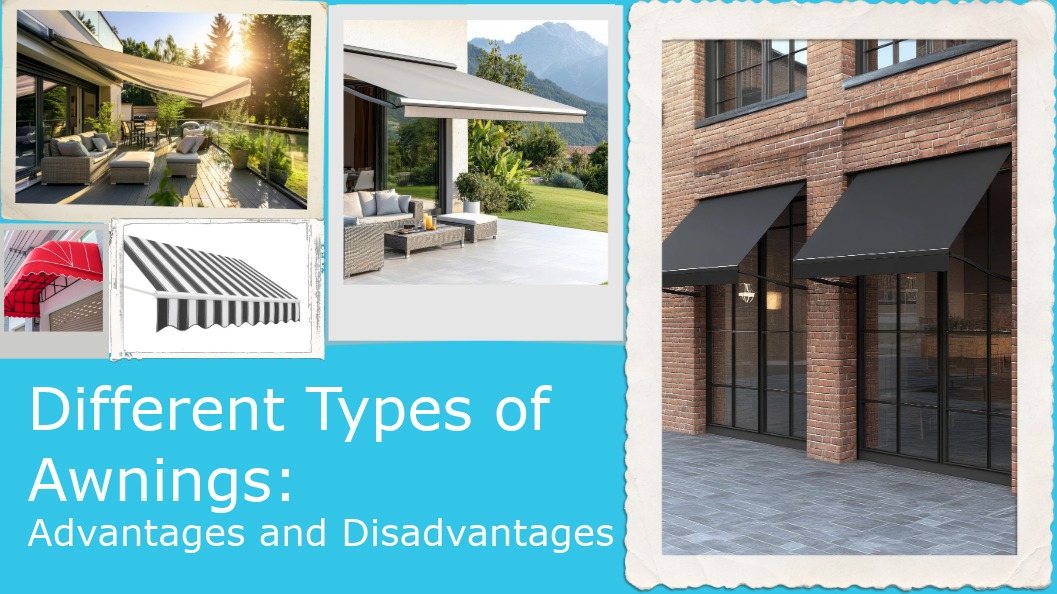
Traditional Victorian Awnings
Traditional Victorian awnings are considered more ornate exterior shade structures that are decorative and in line with the style of the Victorian era (mid-to-late 1800s). They are commonly used as awning shades for shops, verandas and public buildings across Europe and Australia. Typically involving decorative ironwork, Victorian-style colour schemed and with the use of corrugated iron or tin, they help restore or preserve heritage architecture whilst providing shade and weather protection.

Advantages of Traditional Victorian Awnings
- It has an aesthetic appeal different to other types of awnings - they are classic and elegant and add personality and charm to homes, shops or cafes. Adding to that curb appeal is the option to add scalloped edges, fringes and intricate patterns.
- They reduce indoor heat by blocking direct sunlight on windows, doors and small patios.
- Traditional Victorian awnings provide basic shelter from light rain, protecting entryways and outdoor furniture.
- They can be customisable to match your decor in various fabric types, colours and patterns.
- They’re less obtrusive and smaller than larger patio awnings.
Disadvantages of Traditional Victorian Awnings
- They don’t have as much flexibility and versatility as modern retractable or motorised awnings, which means they offer less coverage - in terms of protection, larger patios and deck areas are not well protected.
- They are less durable in the harsher elements, such as strong winds, heavy rain and snow, and such weather conditions may cause the awning fabric to fade or deteriorate at a faster pace.
- More care and maintenance is required for the Victorian awnings, such as regular cleaning of dirt and dust.
- Most traditional Victorian awnings are fixed, so it lacks the flexibility of being able to retract to protect the structure.
- The fixed awning cost is considered more expensive than other awning styles due to ornate designs and high-quality fabric being used.
Retractable Awnings
Retractable awnings are adjustable, shade-providing structures that can be extended or rolled back (foldable awnings), which can be mounted over doors, patios, windows, balconies or decks. Operated manually (with a crank) or automatically (electrically operated), they come in different forms, such as cassette awnings and folding arm awnings, and they have a lighter weight frame (usually made from aluminium for its corrosion resistance properties).


Advantages of Retractable Awnings
- There’s a lot of flexibility when it comes to retractable awnings, as they can be extended for shade or rain protection. The angle can also be adjusted to allow control over sun exposure.
- Patios and outdoor areas are left unobstructed as they can retract fully against the wall or ceiling when they’re not in use.
- They are very energy efficient as they reduce the heat build up in your home, which in turn lowers cooling costs.
- You can bring the ‘indoors outdoors’ with a retractable awning and create a comfortable shaded area, without the need of a permanent structure.
- Retractable awnings come in a range of modern and colourful designs and fabrics to enhance the look of your house or patio.
Disadvantages of Retractable Awnings
- The cost for retractable awnings are considered more expensive than fixed awnings, in particular the motorised versions with sensors.
- Although they are easy to use, retractable awnings do require some maintenance of the mechanisms on the frame and also the fabric to be cleaned and inspected regularly.
- Unless the awning fabric is high quality, retractable awnings are not designed for high winds. It’s recommended to have wind sensors.
- The awning fabric can become damaged due to sun bleaching, UV ray exposure and mildew, therefore if you don’t look after the awning fabric, you will be shortening the life of the canopy furthermore.
- Retractable awnings require adequate wall space and clearance above windows and doors in order to retract properly.
Drop Arm Awnings
Drop Arm awnings is a type of retractable awning that’s designed for smaller outdoor areas, such as balconies. When opened, the awning fabric rolls down from the top tube alongside the two arms on each side dropping down to hold the fabric at an angle that can be adjusted. You may also find them as awning shades for shops.
Advantages of Drop Arm Awnings
- Drop arm awnings allow you to have superb sun and glare control - this is because the awning can be angled outward to block morning or afternoon sun, and to protect interior furnishings from UV exposure and damage.
- Awnings with a drop shade allows better ventilation, because the awning drops outwards rather than lying more flat - this helps with maintaining a cooler indoor temperature without heat being trapped near the window.
- Drop arm awnings complement heavily traditional cottages, modern homes and storefronts, as their elegant design fits those kind of architectural styles.
- In comparison to retractable patio awnings, the cost of Drop Arm awnings is considerably cheaper, because they cover smaller areas and have simpler mechanisms.
- When partially retracted, Drop arm canopies handle moderate wind speeds better than large awnings, due to the angled arms and compact projection.
Disadvantages of Drop Arm Awnings
- Drop arm window awnings offer limited coverage, because they’re not suitable for larger areas - they are not to be used to shade wide patios, outdoor seating areas and large decks
- Drop arm awnings offer less rain protection because of the angle that they are placed at - they’re not ideal for shading from heavy rain showers, and steep angles allows rain to blow inside
- Many drop arm awnings are manual, so it requires more effort to use - if you have drop arm window awnings upstairs, it makes using the awning inconvenient. If you have limited mobility, this could also present usability problems
- If the drop arm awning is fully extended, it poses a risk of the material catching the wind and causing damage to the arms or fabric
- There’s limited projection depth, therefore it’s not ideal if you purely want shade, or to create coverage for an outdoor living space
Manual Awnings
Manual awnings is another type of retractable awning that is to be operated by hand, rather than a more modern electric awning controlled by a motor. A gear and crank handle mechanism is common, including a pull strap to extend or retract the canopy.
Advantages of Manual Awnings
- The cost for a manual awning is lower than motorised options, because they don’t require motors, electrical wiring or smart sensors with remote controls. They are perfect as window, patio and deck awnings.
- Because manual awnings rely on simple mechanical components, it means that they’re less likely to break down, they’re a lot more reliable and should any damage occur, the repair costs are low.
- No electricity is needed for manual awnings, so this style is suitable for off-grid cabins, older properties and areas where wiring is difficult to install or maintain.
- Manual awnings are very easy to maintain - you would need to oil the moving parts occasionally, clean the awning fabric and adjust the tension of the awning if need be.
- Manual awnings are considered safer in wind, because people retract them more often in poor weather.
Disadvantages of Manual Awnings
- Manual awnings take a lot of physical effort. The crank can become tiring and annoying should you need to make frequent adjustments of the awning, and they are also not suitable for those that have mobility issues.
- Manual awnings are less convenient than electric awnings - the operation takes more time, adjustments are hard to make during sudden weather changes and you can only operate the awning from a specific location and without the luxury of a remote control.
- Manual window awnings on upper floors become inconvenient due to reach, unless extended crank rods are used.
- Manual awnings are limited when it comes to size. This is because having manual large awnings are harder to crank, in turn putting strain on the mechanism and they may feel too heavy to operate.
- Manual awnings have fewer modern features, such as sensors, timers and remote controls.
Electric Awnings
Electric awnings are retractable awnings powered by an electric motor, typically paired with wind sensors, a remote control, a wall switch or a smart-home system.
Advantages of Manual Awnings
- Electric awnings are convenient - you can retract the awning using a wall switch, remote control or a smartphone app (to connect you to smart home systems. It takes a matter of seconds to operate and with no physical effort.
- Motorised awnings are ideal for users of all ages, mobility and abilities.
- The operation of electric awnings are smooth and precise, as the motor provides consistent movement, clean extension and retractions and it provides less strain on the awning arms and fabric.
- It’s considered safer to have an electric awning, as there are various sensors in place to ensure safe retraction of the awning and to adjust to sudden changes in weather conditions.
- Electric awnings are a fantastic option for larger awnings, as the motors can handle big spans, long projections and also heavier duty fabrics.
Disadvantages of Manual Awnings
- The overall electric awning cost is higher than other structures, due to the motorised and wiring parts, including the complication of remote systems and sensors.
- For electric awnings, the potential for electrical or motor failure is high - common issues include motor burnout, failures when it comes to syncing to smart systems and faulty sensors, too.
- Awning installation costs are more complex - for a successful and safe installation, you will require a licensed electrician, routing of cables and a nearby power outlet. This increases the set up time and therefore the cost.
- Having an electric awning with installed sensors means you may become overreliant on them - there may be a fault in the sensor that hasn’t been detected, and can cause great damage to the awning if left open in unsafe conditions.
- Although electric awnings aren’t especially noisy, they may make quieter sounds, such as ‘humming’ or clicking relays.
Waterproof Awnings
Waterproof, or more realistically ‘water-resistant’ awnings are made from fabric that either prevent water from passing through the fabric, or allows water to slide off. This type of awning fabric is usually PCV-coated polyester, vinyl or acrylic with a waterproof coating.
Advantages of Waterproof Awnings
- Awnings that have a waterproof canopy make them a reliable protection from rain - these are ideal for patio awnings, balconies, outdoor seating areas and various commercial spaces (such as cafes and restaurants). Moderate rain doesn’t mean you can’t keep using your outdoor space.
- There’s a prevention of water pooling, as high quality waterproof awnings are built with reinforced seems, a proper angle alongside tensioned fabric.
- Waterproof awning fabric increases the durability and strength of the awning overall - they resist mold and mildew, they maintain their strength over time, and they’re able to withstand moisture more efficiently.
- If you have waterproof awning fabric, it means that the awning is suitable for year-round use.
- Apart from providing excellent rain coverage, most waterproof awnings can block glare, heat and UV rays.
Disadvantages of Waterproof Awnings
- Typically, awning fabric is heavier which means that the awning needs to have a stronger frame, which in turn means an increase in installation complexity and harder to use manual awnings.
- The thicker the awning fabric is, the less breathability it has and so heat can get trapped underneath which makes the heat feel hotter on warm days. Once more heat is trapped underneath, the more humidity buildup there is.
- Most awning material is water resistant, but to make it waterproof requires more coating processes to happen and reinforced stitching, therefore adding to the overall awning cost.
- If you would like a more traditional aesthetic when it comes to your awning, waterproof material may not be suitable as the fabric has a more shiny finish and also a more commercial aesthetic.
- A perfectly functioning awning requires a proper pitch - if waterproof fabric is being used, it needs to be pitched at the perfect angle to avoid water pooling.
Large Awnings
Large awnings will vary in size from supplier-to-supplier, but anything about a 3m awning is considered large. Large awnings can be large in terms of width, projection and the general fabric area of the awning. Bear in mind that although larger awnings can cover a bigger area, they may need extra reinforcement, such as extra arms and multiple mounting points.
Advantages of Large Awnings
- If you have an extensive area that you are looking to cover, such as pool areas, outdoor and multiple seating areas, then a large awning is your go-to. Having a large awning makes your outdoor spaces more comfortable in sun and heat.
- Large patio awnings provide high-quality canopies to block harmful UV rays, which protects your outdoor furniture, reduces indoor heat gain and prevents sunburn.
- Large awnings provide a great source of shelter from rain - they can shield you from light rain and keep outdoor spaces useable.
- Large awnings can improve your property’s appearance and curb appeal, which in turn can attract more passer-bys.
- If you are looking to define an outdoor space for a particular use, large awnings can help you do this.
Disadvantages of Large Awnings
- The initial cost for large awnings are more expensive than other awnings. This is due to a larger fabric area, complexity of installation and the need for stronger frames.
- The wind load may be increased, purely down to a large surface area, and so your large awning may require reinforced supports or columns.
- The fabric on the awning may fade, stretch or grow mold/mildew over time, meaning a need for more maintenance. The mechanical parts may also need servicing, and cleaning is a must due to the size.
- The installation is quite complex and will require employing somebody with the appropriate skill set. You may also need permits or compliance with building codes (depending on your property).
- You may be limited seasonally in terms of its use. Snow accumulation can cause damage to the fabric, and so there is often the need of removal or retraction in wintry conditions.
Balcony Awnings
An awning for a balcony is a specialised structure, designed to provide shade, rain protection and privacy from other balconies, terraces and small outdoor spaces. They are smaller and more compact in size in comparison to commercial awnings. They come in various designs, including retractable awnings, lateral-arm awnings, drop-arm awnings and fixed-frame awnings.
Advantages of Balcony Awnings
- Awnings for balconies are fantastic for sun and heat protection; this means that there’s a reduction in glare and direct sunlight, lower heat gain for lower indoor temperatures and can help protect floors, furniture and curtains from UV damage.
- If your balcony awning has a rain proof canopy, it means that the balcony is having protection from light rain and allows the area to be used during mild weather conditions.
- Many commercial businesses or residential properties use awnings for their balcony to improve their general comfort and privacy. For the ultimate privacy, drop arm awnings improve privacy the most.
- Heat gain is reduced, in particular for balconies facing South or West.
- Balcony awnings can enhance the appearance of your property, due to them being available in different styles, colours and fabrics, in turn increasing the value and appeal of your building.
Disadvantages of Balcony Awnings
- The initial awning cost can be quite expensive, alongside installation - do bear in mind that any motorised parts and custom designs may add to the price.
- Balconies are often exposed to strong winds, therefore you’ll need awning fabric that is strong and durable. All retractable awnings must be retracted in windy conditions, and fixed awnings may require some reinforcements.
- Balcony awnings can be high maintenance - awning fabric can fade or tear over time, mechanical parts will need occasional servicing and, lastly, regular cleaning is required (especially if your property is in a polluted area).
- If you have an awning for a balcony, this could be as part of a building of flats, therefore you may need building management approval, as well from homeowner associations and local authorities.
- It is recommended to retract or remove your balcony awning in wintry conditions. This is because snow accumulation can damage awnings, in particular the fabric.
Patio Awnings
Awning covers for patios are outdoor coverings with the aim of providing shade, weather protection and comfort over areas such as patios, decks and other outdoor living spaces. Larger than window or balcony awnings, they are usually mounted to the exterior wall of a house or commercial building above a patio or decking area. The frames are usually made of aluminium or steel, and the awning fabric is commonly acrylic, polyester or waterproof PVC.

Advantages of Patio Awnings
- The ultimate advantage of patio awnings is that they provide expert sun protection and comfort. They do this by blocking UV rays, in turn reducing sun exposure. With that, they’ll keep your patio cooler and can make your patio useable for longer periods of time.
- Patio awnings are able to provide shade during light rain spells, and also protects your outdoor furniture from rain damage or even from fading caused by the sun.
- Patio awnings are able to reduce the amount of heat entering your property via doors and windows, therefore lowering indoor cooling costs during hotter months.
- Awnings for patios in particular are able to add a certain aesthetic appeal with different styles, colours and fabrics available to choose from, which help create defined and stylish outdoor zones.
- Patio awnings are flexible, so they can retract and have motorised versions, which offer convenience and smart-home integration.
Disadvantages of Patio Awnings
- The initial cost for patio awning installation can be quite high - this is due to higher quality frames and fabric required, and also professional installation will add to your quote.
- To keep patio awnings functioning smoothly, there needs to be regular maintenance, such as cleaning to prevent mold and mildew build up, and also if you’re having a motorised awning, the mechanisms may require servicing from time-to-time.
- Patio awnings are not always the best choice for strong winds, heavy rain or even snow - if you have an awning on your outside patio, they must be retracted during these weather conditions to avoid permanent damage.
- If your patio awning doesn’t have a good quality canopy, there would be concerns over tears and sagging of the material. In addition, fabric can fade or wear over time, should proper maintenance not be kept up with.
- There may be structural restrictions with patio awnings - the foundations of your property may not be suitable for this certain type of awning, and they may require wall reinforcement or even permits from your local council.
Dutch Canopies
Dutch canopies are a type of awning commonly used over windows, doors or small outdoor areas, in the same of an arch or a curve – they resemble a small dome or tunnel, which distinguishes them from flat or retractable awnings. Dutch canopies are fixed in place and have the flexibility to be retracted. You can usually find them in areas of European or traditional-style architecture.

Advantages of Dutch Canopies
- Dutch canopies are designed to shade windows and block sunlight, and so they have effective sun and light control - they help reduce glare and to keep interiors cooler.
- Dutch awnings offer some shelter from light rain, in turn protecting interior furniture and fabrics from harsh UV exposure.
- Dutch awnings traditionally have a classic curved design that can add architectural interest to your property, as well as enhancing the exterior appearance of your building, whether they be for homes or businesses
- These particular types of awnings are lightweight and are less bulky than large folding arm awnings, so they’re the perfect awning if your foundations can’t hold a very heavy awning.
- Dutch canopies have fixed or retractable versions, and they can be manual or motorised for your convenience.
Disadvantages of Dutch Canopies
- Dutch canopies offer limited shade coverage - because of their curved shape and their short projection, they don’t extend far enough away from the property to provide substantial shade for a patio or outside seating areas.
- If your property has low ceilings or outward opening doors, dutch canopies may not be the best option for you, as the overall design of the canopy means there needs to be adequate headroom to install.
- Alongside most fabric canopies, dutch canopies are less suited to heavy weather conditions, such as rain, winds and winter storms. They may require retraction or protection for that type of weather.
- In order to look after you canopy, there needs to be periodic care to be done to the fabric and mechanisms, to avoid mold, fading or wear and tear on the awning fabric.
- Dutch canopies are not a substitute for large patio awnings, or even pergolas. If your main goal is extensive outdoor living area coverage, you would need to consider a different shading structure.
Wedge Canopies
Wedge canopies hold some of the same properties as a Dutch canopy, but they’re in a triangular or sloped ‘wedge’ shape – you can usually find them over windows and small entrances to provide shade and rain protection with a sleek and modern aesthetic. They are a common awning for commercial buildings, and are usually fixed to the building without the ability to retract.

Advantages of Wedge Canopies
- A huge advantage of having wedge canopies is that they create a simplistic, classic and minimalist profile that enhances the appearance of your property. They’re a fantastic choice if enhanced building aesthetics is one of your main goals.
- Wedge canopies have a relatively visible top surface, which makes it perfect for branding, such as shops, restaurants and other hospitality businesses - this can be done in the form of logos, signage and custom graphics.
- Wedge canopies are usually made of strong aluminium frames, with the best fabric on offer, therefore they’re more resilient to harsher weather conditions than other awnings styles, and provide shade and light rain protection.
- Wedge canopies are fixed to your building and require very little maintenance, as there are no motorised parts to service.
- If you have a small space then wedge canopies are a great option. This is because wedge canopies don’t need long projection distances.
Disadvantages of Wedge Canopies
- Wedge canopies have a shallow slope and a shorter projection, and so they provide limited coverage - they’re unable to provide shade or extensive area coverage.
- Wedge canopies are installed in a fixed position, therefore there’s no retractability - they cannot be adjusted to withstand glare or alter the angle for more shade.
- Whilst wedge canopies are great for protection against sun and light rain, they don’t offer the same type of protection against heavy rain or snow as the awning structures aren’t large or steep enough.
- Due to the short projection, wedge canopies are not suited to shading outdoor seating or entertainment areas - their main purpose is for decorative shading and signage.
- Wedge canopies are fantastic for branding and creating curb appeal, but there are few style and angle options to select from.
House Canopies and Awnings
House canopies and awnings are usually deemed similar, but there are differences between the two. House canopies are more roof-like coverings with a rigid frame, and they can be found in a Dutch, Wedge or Flat awning style. You can find them above entryways, windows, patios and balconies, and they also serve as a decorative architectural element. If you’re in an area that is exposed and prone to extreme weather, House Canopies is the more durable option to consider. House Awnings are usually fabric-covered, retractable or fixed structures that extend and retract from the exterior portion of a house or commercial building over windows, doors, patios and balconies. They come in a range of styles, such as lateral-arm, drop-arm, patio or balcony awnings.
Advantages of House Canopies and Awnings
- House canopies and awnings provide top of the line sun and UV protection - this includes reducing glare and heat indoors, protecting your skin from UV exposure and also prevention of fading of carpets and furniture.
- House canopies and awnings have been known to improve the energy efficiency of your property - they help keep your property cooler in summer, which therefore lowers the cost of air conditioning-use. Properties facing South and West will benefit from this the most.
- Weather protection is a huge advantage of house canopies and awnings. They provide shelter from rain at doors and windows, which in turn keeps any entrances dry and safe throughout wet weather.
- If you have an extensive outdoor area that could be used more often, then house canopies and awnings are great considerations. They make patios, decking areas and gardens more comfortable and stylish, as well as providing shaded areas for relaxing and entertaining, and being able to stay outdoors during light rain.
- With retractable and motorised options available, as well as being able to choose from various styles, colours and material, they will add an aesthetic and property value boost whilst enhancing curb appeal.
Disadvantages of House Canopies and Awnings
- The better quality a house canopy or awning is, the more expensive it is - motorised awnings and bespoke canopies in particular add to the overall cost, but if professional installation is required, this will also increase the cost.
- House awnings and canopies require maintenance throughout the year. This is because the fabric will need regular cleaning to avoid mildew and mold build-up and any moving parts may need to be serviced.
- Whilst fabric can be extremely strong and water resistant, it may be damaged by strong winds if the awning/canopy hasn’t been retracted.
- Lower quality house canopies and awnings may face durability issues over time, such as fading of material, cheaper frames may corrode or bend and motors and sensors can fail if they’ve been poorly maintained.
- Fabric awnings are mainly seasonal, and so may limit how much you use them over the year.
What is the best type of awning?
This question will vary from person-to-person, as every household or business has different goals. It will also depend on the climate you are living in, the budget you have available and also how the space will be used. Hopefully this guide will help you decide which product is the best system for you.

