



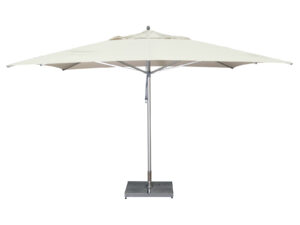


Centre Pole
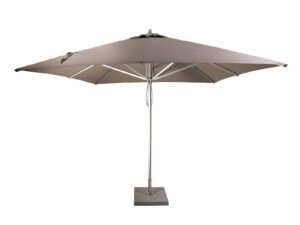
Bambrella Santa Ana
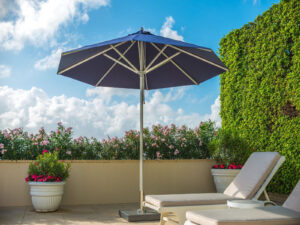
3 m round centre pole, lightweight aluminium frame, available in 4-rib or 6-rib acrylic canopy. The most popular model in the residential range.

There is a moment every garden owner recognises. You have made the effort with the table, the chairs, and a proper lunch. Then you realise the sun has moved, the table is in full glare, and the parasol you bought three summers ago has started to go orange at the joints. It is not a crisis, but it is annoying enough to make you do something about it.
Aluminium parasols solve the rust problem permanently. The frame does not corrode, it does not need seasonal treatment, and it does not leave brown stains on your paving when it rains. What you get instead is a shade structure that weighs around a third less than steel, holds its shape in the wind better than wooden poles, and looks the same after three years as it did on delivery day.
Our range covers residential gardens and commercial terraces. From the Bambrella Santa Ana at £312 for a classic 3m round that suits most patios, up to the Hurricane Side Wind at £1,557 for exposed coastal or commercial venues where wind loading matters. Browse the full range below, or read on if you want to understand what actually separates one aluminium parasol from another before you buy.
Showing all 8 results
Showing all 8 results
A parasol you can open one-handed in thirty seconds gets used every day. One that requires two people and a ten-minute negotiation with a rope pulley stays in the garage.
Aluminium forms a natural oxide layer on its surface that acts as its own protection. Add a powder coat or anodised finish on top and the frame is genuinely impervious to moisture. You will not find the kind of pitting or joint failure that eventually works its way through cheaper painted steel poles.
A typical aluminium parasol pole weighs between 2.5 kg and 5 kg depending on diameter and height. A comparable steel pole is often 8–12 kg. That matters when you are lifting the parasol in and out of its base, tilting it, or moving it across a terrace. Commercial venues that reposition parasols daily will notice the difference every single shift.
Aluminium has a higher strength-to-weight ratio than steel. A 48 mm diameter aluminium pole can carry the same canopy load as a 60 mm steel pole. This is why aluminium frames can use more elegant proportions without sacrificing structural performance, which is partly why the material has become standard in the premium outdoor furniture sector.
Most aluminium parasols come in powder-coated silver, bronze, black or white. Some ranges offer anodised aluminium in satin or brushed finishes. Unlike painted steel, a quality powder coat on aluminium, bonds at a molecular level during curing and does not crack or flake in the same way. Our sustainability page covers how aluminium is also 100% recyclable at end of life, which matters if your purchasing decisions include environmental criteria.
Understanding the construction differences between models helps you pick the right one the first time. There are a handful of specifications that actually affect performance, and knowing what to look for takes about two minutes.
Residential parasols in the 2.5 – 3 m canopy range typically use a 38 mm diameter pole. This is sufficient for calm to moderate wind conditions and for bases up to 25 kg. Once you move to 3.5 m and above, or to exposed garden positions, a 50 mm pole is the correct choice. Commercial models, including cantilever designs, generally start at 50 mm and some heavy-duty versions use 60 mm. Our parasol buyer guide covers sizing in detail if you are between two specifications.
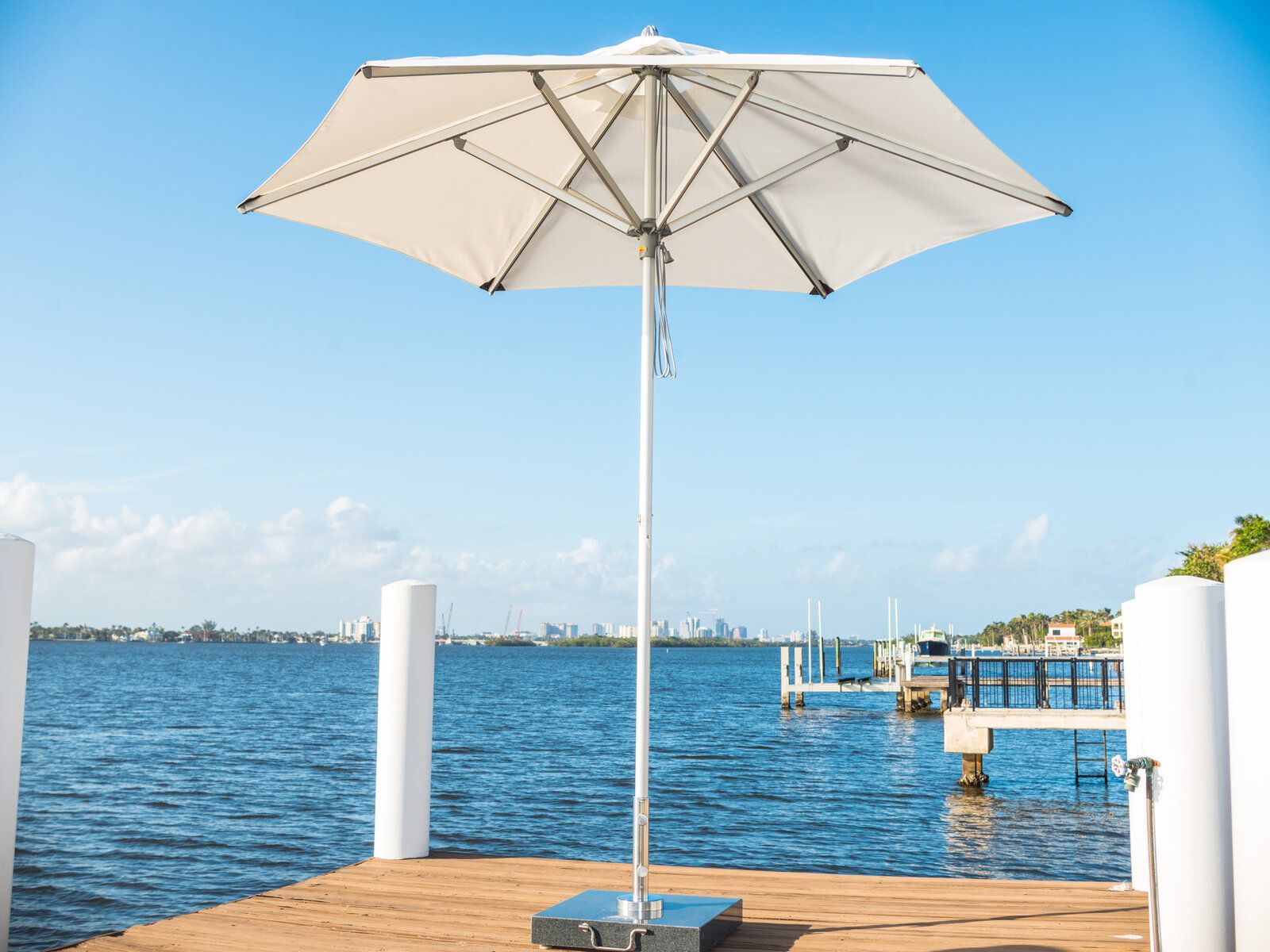
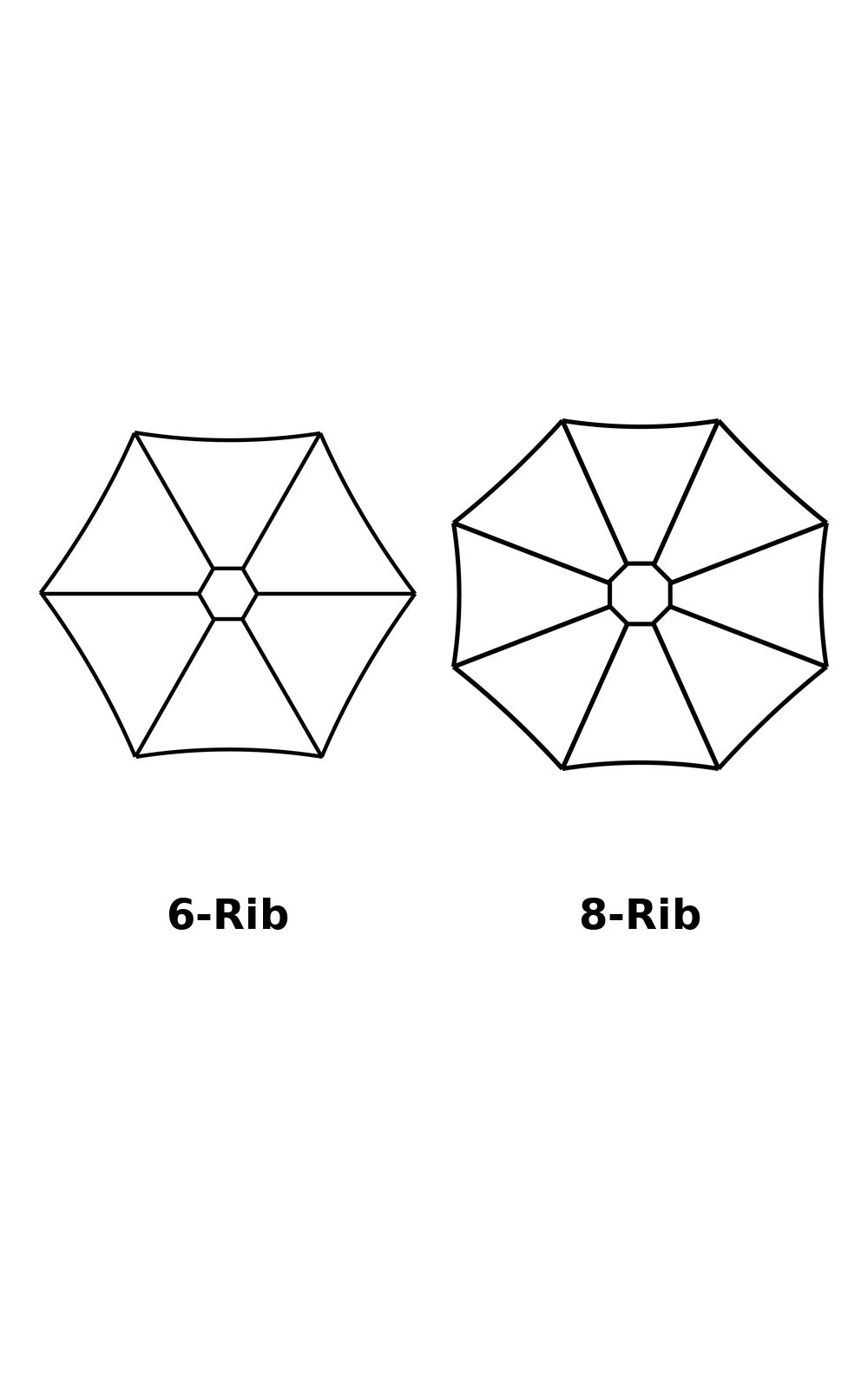
The canopy frame is where cheap parasols cut corners first. A 6-rib canopy is standard on entry-level models and performs acceptably in sheltered gardens. An 8-rib canopy is the practical minimum for any exposed position or parasol above 3 m in diameter. The best part of 8-rib canopies is that it provides the tightest canopy tension, which reduces flapping and sail-effect drag in wind. Rib thickness also matters: 15 mm ribs are fine for domestic use, 20 mm ribs are the commercial standard.
Powder coating is the more common finish. The frame is electrostatically coated in dry powder, then cured in an oven at around 200°C. The result is a thick, hard skin that resists chipping, UV fading, and moisture penetration. Anodising is an electrochemical process that thickens the natural oxide layer on the aluminium itself rather than adding a coating on top. Anodised finishes are harder to scratch and have a characteristic metallic appearance that powder coating cannot replicate. For most gardens, a quality powder coat is entirely adequate. If you want the most durable and visually premium finish, anodised is worth the extra cost.
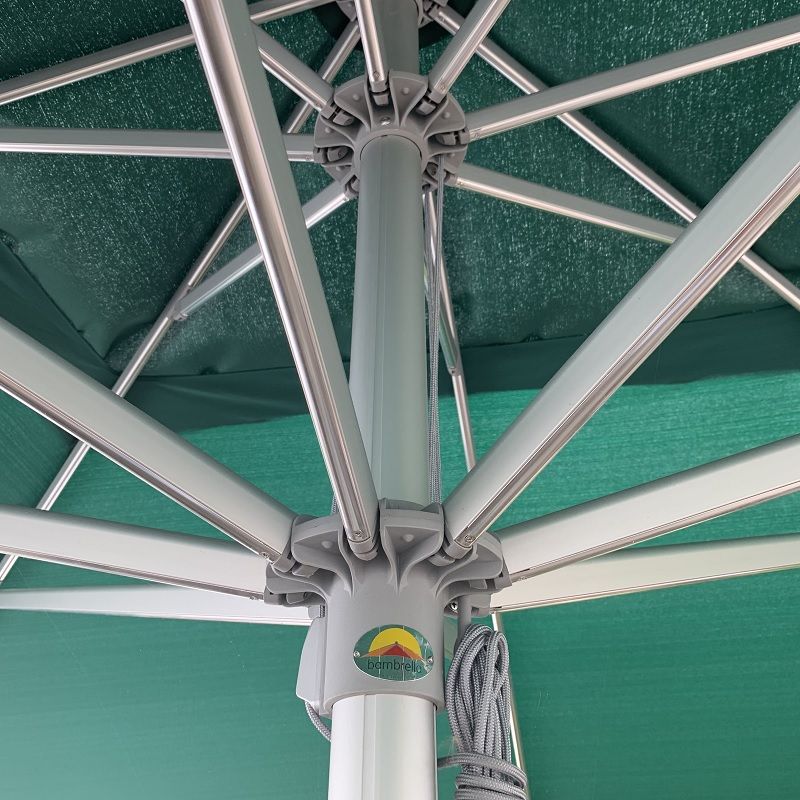
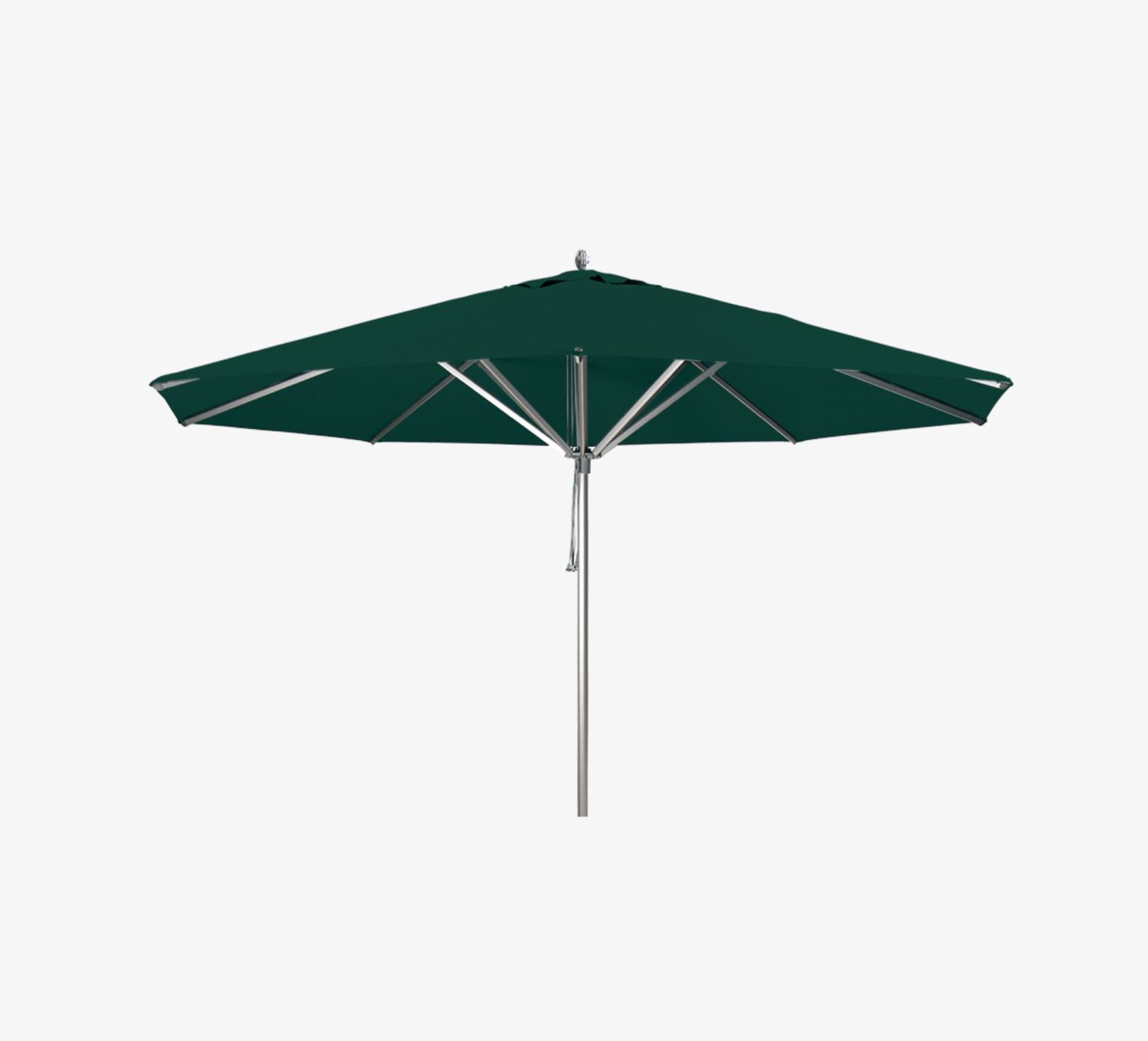
The frame may be aluminium, but the canopy does the actual work. Our aluminium parasols use either acrylic canvas (Bamcrylic and Recasens grade) or polyester with a UV and water-resistant coating. Acrylic canvas breathes, resists mould formation, and holds colour under UV exposure for significantly longer than coated polyester. If the parasol is staying up for long periods in summer, an acrylic canopy is worth specifying. See our guide to parasol canopy materials for a full comparison.
Our aluminium range divides into three functional types. Each suits a different space and a different kind of use, so it is worth being clear about which one matches your situation before you look at individual products.
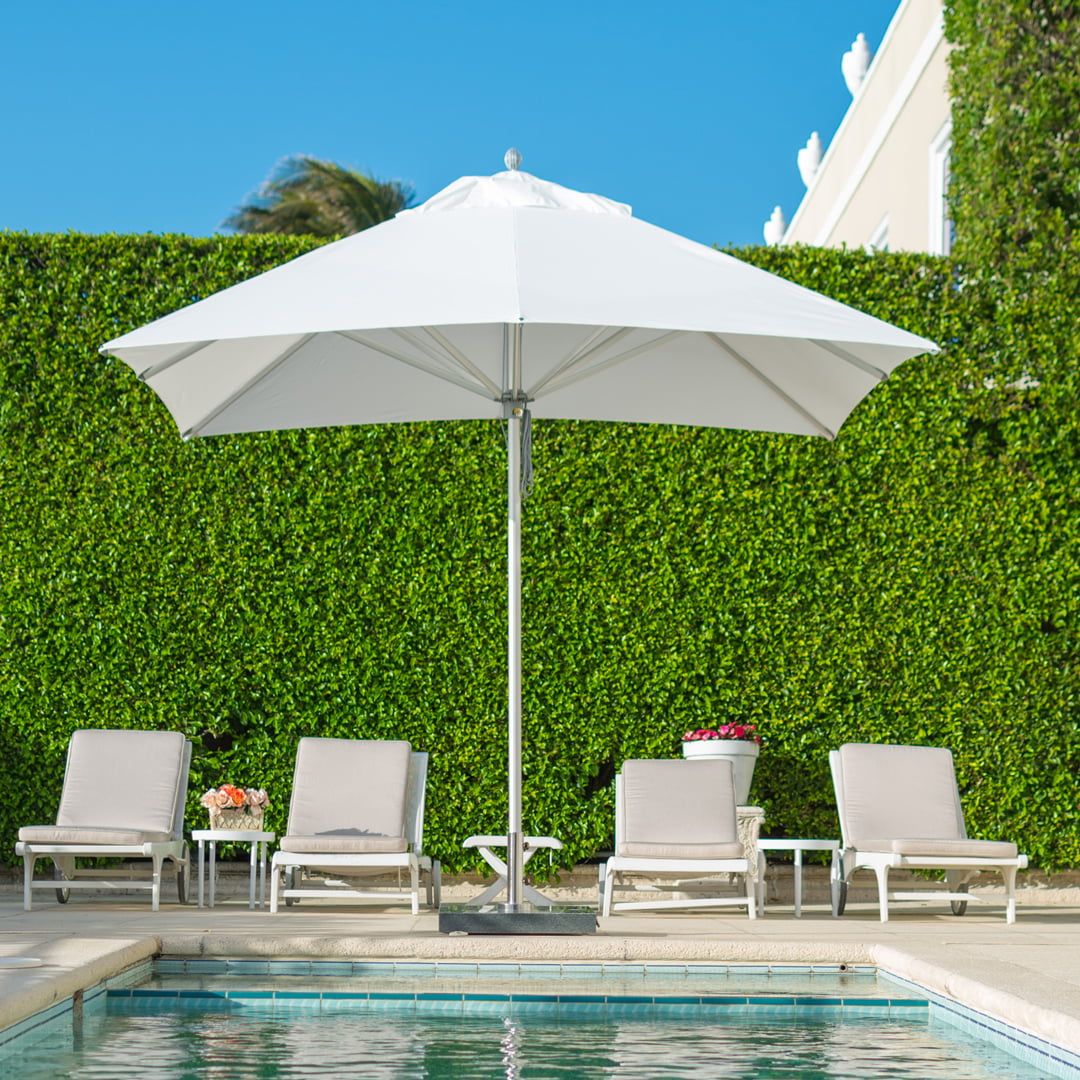
These are the classic format: a single central pole, a symmetric canopy above it, and a base underneath. They suit square or circular tables where the pole can sit in the centre aperture without getting in the way of chairs. Our centre pole parasol range includes several aluminium models from 2 m to 3.5 m diameter. They are the most stable format in wind because the load path runs straight down through the pole into the base.

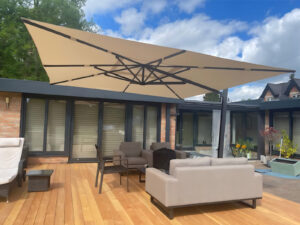
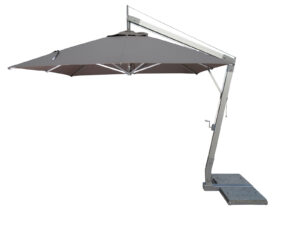
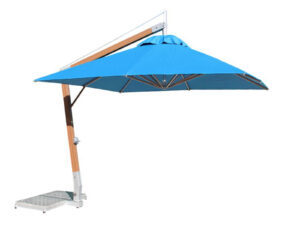
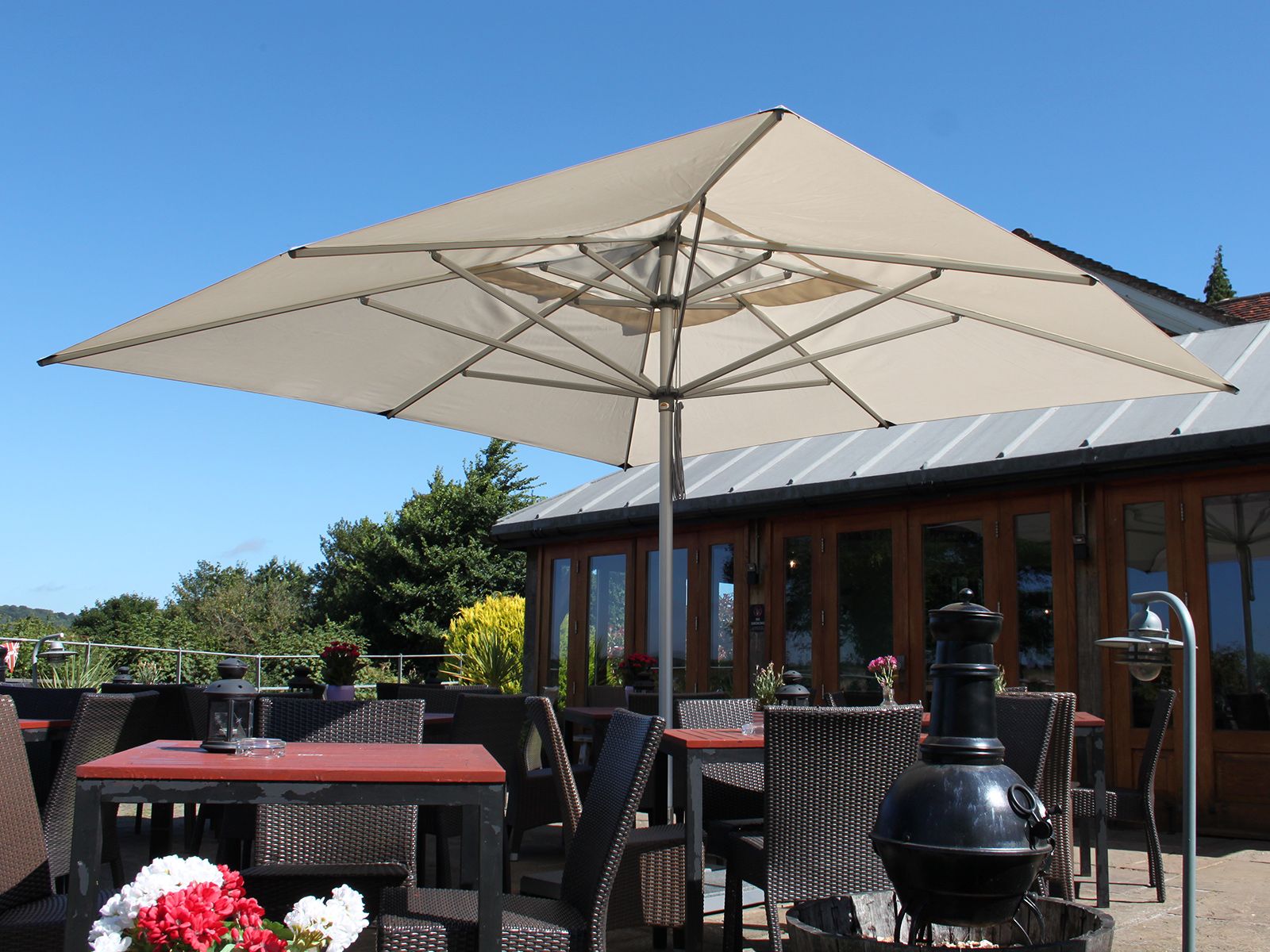
The pole sits to one side and the canopy extends overhead on a horizontal arm. This allows full access to the space underneath without a pole in the middle of the table. The trade-off is that cantilever parasols require a heavier base, typically 60 – 100 kg, to counterbalance the offset load. Our commercial cantilever range uses aluminium frames throughout and suits both large residential terraces and commercial hospitality venues.
If you are covering a significant outdoor seating area, a single large canopy is often more practical than several smaller ones. Our large commercial parasols start at 4 m and are engineered to commercial wind-load specifications. These are specified by restaurants, hotels, and contract landscapers rather than individual homeowners.
Our aluminium parasol range offers stylish, durable shade solutions for gardens, terraces, and commercial outdoor spaces.
Centre Pole
3 m round centre pole, lightweight aluminium frame, available in 4-rib or 6-rib acrylic canopy. The most popular model in the residential range.
Centre Pole
3.5 m × 4.5 m rectangular, 50 mm aluminium pole, 8-rib canopy. Built for larger dining tables and exposed terraces.
Centre Pole
4 m round, 50 mm heavy-gauge aluminium, 8-rib frame, wind-tested to Beaufort 6. The commercial-grade centre pole option for exposed terraces.
Cantilever
3.5 m cantilever, reinforced aluminium joint construction, wind-tested to Beaufort 7. Built for coastal venues and rooftop terraces where standard parasols fail.
Not sure which size is right for your table? Our parasol size and shape guide covers the standard rule: add 0.5 m on each side of the table footprint to calculate the minimum canopy diameter.
The opening mechanism matters more than most buyers realise, and it is one of those details you only appreciate fully after you have spent a summer operating a system that frustrates you every time.
A handle at the base of the pole that you turn to open and close the canopy. This is the practical default choice for most gardens and all commercial settings. It takes a few turns to fully open a standard canopy, requires no physical effort, and allows complete one-handed operation. If the parasol is going to be opened and closed regularly, this mechanism for small parasols is a good one. Anyone who has wrestled with a pulley cord in the wind will not go back.
A rope that threads through a pulley system and is secured to a cleat on the pole. Functional and reliable, but requires both hands and some physical effort, particularly on larger canopies. Better suited to parasols that stay open for extended periods rather than those opened and closed throughout a service period.
A push-button or slider that you lift manually to open the canopy. The most common mechanism on smaller, lower-cost models. Works fine on a 2 – 2.5 m canopy but becomes impractical above that diameter.
All aluminium cantilever parasols in our range offer a tilt mechanism that lets you angle the canopy towards the sun. Tilt is also available in the centre-pole range but is limited to the Stellar Tilting parasol and is operated by the crank handle itself.
A tilting feature is worth having in parasols, particularly in the afternoon when the sun drops low. A tilted 3 m parasol covers a noticeably larger area of table than a vertical one. Read our guide on choosing the best position for a garden parasol for placement advice that makes tilt less necessary in the first place.
Some cantilever models include a rotating base that allows the canopy to track the sun through the day without moving the base itself. Useful for large terraces and venues where shifting the base would disturb guests.
The TORR range of parasols incorporates lighting directly into the rib structure, powered by a rechargeable battery with a USB-C port for charging. No cabling comes in between. Average run time is 6–8 hours on a full charge at medium brightness. More detail in our parasol lighting guide. For all other parasols, you will need to purchase lighting separately.
Getting the size wrong is the most common mistake in parasol buying. People tend to underestimate how much a canopy area shrinks in practice once you account for the angle of the sun.
| Use case | Table size or layout | Recommended canopy | Coverage and guidance |
|---|---|---|---|
| 2-person table | 60–80 cm diameter | 2 m or 2.5 m round canopy | At midday with the canopy vertical, a 2.5 m canopy covers roughly 4.9 m² of ground. With the sun at 45 degrees, useful coverage drops to about 3.5 m². That is adequate for two people but leaves little margin. |
| 4-person dining table | 90–120 cm × 150–200 cm | 3 m round or 2.5 m × 2.5 m square | A 3 m round gives 7 m² of coverage at midday. This is the most popular size in our range for a reason. The Santa Ana at £312 is sized for exactly this use case. |
| 6–8 person table | 90 cm × 200–240 cm | 3.5 m round or 3 m × 4 m rectangle | Most buyers at this size should consider a rectangular canopy because it matches the table geometry better. A 3.5 m round parasol placed off-centre over a long table leaves one end exposed; a 3 m × 4 m rectangle does not. |
| Commercial terrace | 2.5 m spacing between parasol centres | Multiple parasols | Coverage calculations change when you are placing multiple parasols. The standard hospitality layout uses 2.5 m spacing between parasol centres to allow for chair clearance and create a consistent shaded corridor. Our commercial parasol page covers layout planning and volume pricing. |
Our parasol size and shape guide includes a calculator table for common table sizes and sun angles throughout the UK summer.
An aluminium frame is only as stable as the base it sits in. This is worth stating plainly because it is the detail that causes the most problems in practice.
A 3 m round aluminium parasol in a 15 kg base will move on a gusty day. Not dramatically, not dangerously, but enough to require constant repositioning. Put the same parasol in a 25 kg base and it stays where you put it. Put it in a 50 kg base and it stays put even in conditions that would have you bringing the parasol in anyway.
The general guidance for residential aluminium parasols is: match base weight to canopy diameter as follows.
| Canopy diameter | Minimum base weight (lower end) | Recommended base weight (higher end) |
|---|---|---|
| 2 m – 2.5 m | – | – |
| 2.5 m – 3 m | – | – |
| 3 m – 3.5 m | – | – |
| 3.5 m+ / cantilever | – | – |
These are outdoor conditions figures. If the parasol is in a sheltered courtyard with walls on three sides, you can use the lower end of the range. If it is on an open rooftop or coastal terrace, use the upper end or more.
The pole diameter also matters. A 38 mm pole needs a base with a 38 mm socket. A 50 mm pole needs a 50 mm socket. These are not interchangeable. Our full guide to parasol bases covers every base type in the range. You can also browse all bases directly to find the right match.
Canopy colour is a design decision, but it also has a functional dimension that is worth knowing about before you choose.
Darker canopy colours such as charcoal, slate grey, dark green, navy, tend to absorb more solar radiation and create deeper shade underneath. The trade-off is that the underside of the canopy gets warmer, which can make the space below feel more enclosed on very hot days
Lighter colours such as white, cream, pale sand, tend to reflect more light and feel more open, but the shade they cast is softer and the canopy interior brightness can be uncomfortable to look at.
From a UV protection standpoint, the canopy material matters more than the colour. An acrylic canopy material in white typically achieves UPF 50+ because of the weave density, not the colour. A cheap polyester canopy in dark grey may achieve only UPF 20-30.
Our range uses acrylic canopies rated UPF 50+ across all colours. Read our parasol canopy colour guide for a comparison of how different colours look across a range of garden settings and materials.

If a canopy needs replacing after several seasons of use, we stock replacement parasol canopies sized to fit the most common frame specifications. Aluminium frames last considerably longer than canopies, so a canopy replacement every 5 – 8 years is normal and more economical than replacing the entire parasol.
Aluminium parasols are low-maintenance by design. The maintenance they do need takes about 30 minutes per season and will keep the frame and canopy performing for many years to come.
Wipe the pole and frame joints with a mild soap solution and warm water, using a soft cloth or sponge. Rinse with clean water. Do this once or twice a season, or after any extended wet period. Do not use abrasive pads, solvents, or high-pressure washers on the frame. A pressure washer will not damage the aluminium itself, but it can force water into the joint sockets and opening mechanism, leading to stiff operation over time.
For bird droppings, food marks, or general soiling, use a soft brush and a mild detergent solution. Work in circular motions on the affected area, rinse thoroughly, and allow to dry completely before closing. Do not use bleach. Bleach will strip the UV inhibitors from the canopy fabric and cause the colour to fade unevenly. Do not put the canopy in a washing machine. Acrylic canvas in particular must be cleaned in place or removed and washed by hand.
Before storing the parasol for winter, make sure the canopy is completely dry. Folding a damp canopy leads to mildew, which leaves permanent staining and weakens the fabric. Close the canopy fully, remove it from the base, and store it either in the original carry bag, a purpose-made parasol cover, or a dry garage or shed. Store the base separately. Bases left outside all winter are fine – their weight and sealed finish means they are not vulnerable to frost damage.
If the parasols are operational year-round, which is common for heated terraces, the maintenance schedule changes. Clean the frame and canopy once a month rather than twice a season. Check all joint screws every two months, as repeated opening cycles work bolts loose gradually. Inspect the tilt mechanism annually and apply a drop of light machine oil to the tilt pivot if it shows any stiffness.
Read our parasol heaters guide for advice on running heated outdoor spaces through autumn and winter, including how heat output from patio heaters affects canopy materials.
Do not leave the parasol open during high winds. The stated Beaufort rating on each model is a structural test rating under laboratory conditions. In a real garden with gusts rather than steady wind, close the parasol at Beaufort 4 (moderate breeze, 13 – 18 mph) unless the model is specifically wind-rated for open use. Our windproof parasol range is designed for positions where the parasol must stay open in conditions that would close a standard one.
Aluminium parasols are structurally suitable for year-round installation. The frame does not degrade in frost, and the canopy materials in our range resist mould and mildew growth in damp conditions. Whether you keep the parasol up through autumn and winter is really a question of how much you use the outdoor space rather than what the parasol can handle.
The practical reasons to keep a parasol up in autumn are the same as in summer: rain protection, wind shelter from adjacent structures, and the ability to use outdoor heating more effectively. A parasol directly above a patio heater reduces heat dispersal and makes the space usable at lower ambient temperatures. See our accessories range for heaters designed to work with parasols.
If the garden is unused between November and March, storing the canopy and leaving the pole in its base is a reasonable compromise. The aluminium pole and base need no protection from winter weather. The canopy benefits from being stored dry and away from UV exposure during the months when it is not needed.
The choice of frame material comes up in almost every buying conversation. Here is the practical breakdown.
| Material | Weight | Rust risk | Maintenance | Typical lifespan | Best for |
|---|---|---|---|---|---|
| Aluminium | Light | None | Low | 10–15 years | Most gardens, commercial use |
| Hardwood | Heavy | None (rot risk) | Medium | 10–20 years with treatment | Traditional garden aesthetics |
| Stainless steel | Heavy | Very low | Very low | 15–25 years | Marine/coastal, ultra-premium |
Choose aluminium if you want the broadest range of sizes and colours, the best value-to-durability ratio, and easy operation due to low weight. Consider stainless steel if you are on the coast and want the premium finish and marine-grade corrosion resistance. Consider hardwood if the garden aesthetic is traditional and weight is not a factor.
Our guide to choosing the best garden parasol covers this comparison in more detail, including specific recommendations by garden type.
Aluminium parasols in our range are rated between Beaufort 4 and Beaufort 7 depending on the model. For context, Beaufort 4 is a moderate breeze at 13–18 mph, the kind of wind you would feel on an average breezy day in the UK. Beaufort 5 (18–24 mph, a fresh breeze) is where cheaper frames and undersized bases begin to show strain. The Bambrella Santa Ana, rated to Beaufort 5 with a 25 kg base, handles typical UK summer conditions without issue. The Hurricane Side Wind, rated to Beaufort 7 (32–38 mph, a near gale), is specified for exposed coastal and rooftop venues where standard parasols would need to be closed. If you know your garden is exposed to regular strong wind, specify at least a Beaufort 5 rating and pair the parasol with a base that matches the upper end of the recommended weight range for the canopy size.
Powder coating applies a dry resin powder to the frame which is then heat-cured to form a hard, coloured skin. Anodising is an electrochemical process that thickens the natural oxide layer within the aluminium surface itself rather than adding an external coating. Powder coating allows any colour to be applied and produces a uniform, even finish. It is durable and adequate for almost all residential and commercial applications. Anodising produces a harder surface that is more resistant to scratching and abrasion, but it is only available in metallic tones (silver, bronze, charcoal). For most buyers, a quality powder coat is the right choice. If the parasol will be in an environment with frequent physical contact — a busy restaurant terrace, for example — anodised is worth considering for the frame longevity.
Add 50 cm to each side of your table’s longest dimension to calculate the minimum canopy diameter. A 2 m × 1 m dining table needs a 3 m × 2 m canopy at minimum, which makes a 3 m round canopy the practical choice. Round canopies suit square and round tables; rectangular or square canopies suit rectangular tables. For a 6-person rectangular table (typically 90 cm × 180–220 cm), a 3 m × 4 m rectangular canopy covers the full table area and allows chair movement without guests sitting in direct sun. Our parasol size guide includes a worked example table for every common garden furniture configuration sold in the UK.
Yes. Aluminium frames are not damaged by frost, prolonged damp, or UV exposure. The practical limit is wind: no parasol should be left open in sustained winds above its Beaufort rating, and in winter storms in the UK, that means closing and ideally securing any parasol against the structure. The canopy fares less well than the frame over long periods without use. Storing the canopy dry from November to March and leaving the pole in the base is a sensible compromise. If the space is heated and used year-round — as many commercial terraces are — the full parasol can remain in service provided it is maintained on a monthly rather than seasonal schedule.
Use a soft brush and a mild soap solution. Work on the stained area in circular motions, then rinse with clean water from a garden hose. Allow the canopy to dry fully before closing. Do not use bleach, biological detergents, or solvent-based cleaners — these break down the UV inhibitors in the canopy fabric and cause uneven fading. Do not use a pressure washer on the canopy fabric; the pressure destroys the weave coating on polyester canopies and can loosen the acrylic sizing on canvas grades. For stubborn mildew staining, a solution of white wine vinegar and water (1:3 ratio) applied with a soft brush and left for 20 minutes before rinsing works without damaging the fabric. Avoid this on canopies with printed logos or patterns.
Choose a crank mechanism for any parasol that is opened and closed regularly. A crank opens a standard 3 m canopy in 8–12 turns of the handle with one hand. A pulley requires both hands, more physical effort, and is less convenient in wind because the cord can become slack. The advantage of a pulley is simplicity: fewer moving parts means fewer potential failure points over a very long service life. If the parasol sits in a fixed position and is opened once in the morning and closed once in the evening, either mechanism works. If the parasol is repositioned and adjusted multiple times a day — as in a commercial terrace setting — a crank is the right choice without exception.
 Bambrella Maestro Cantilever Parasol
 Bambrella Levante Bamboo Parasol
 Bambrella Hurricane Aluminium Parasol