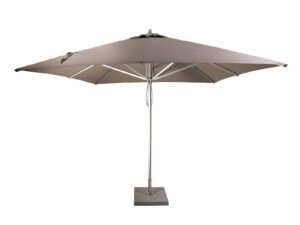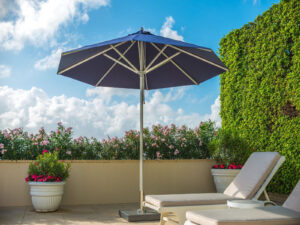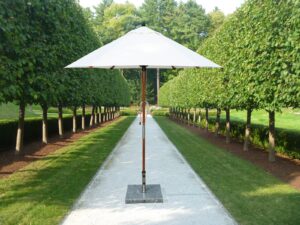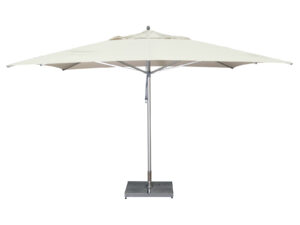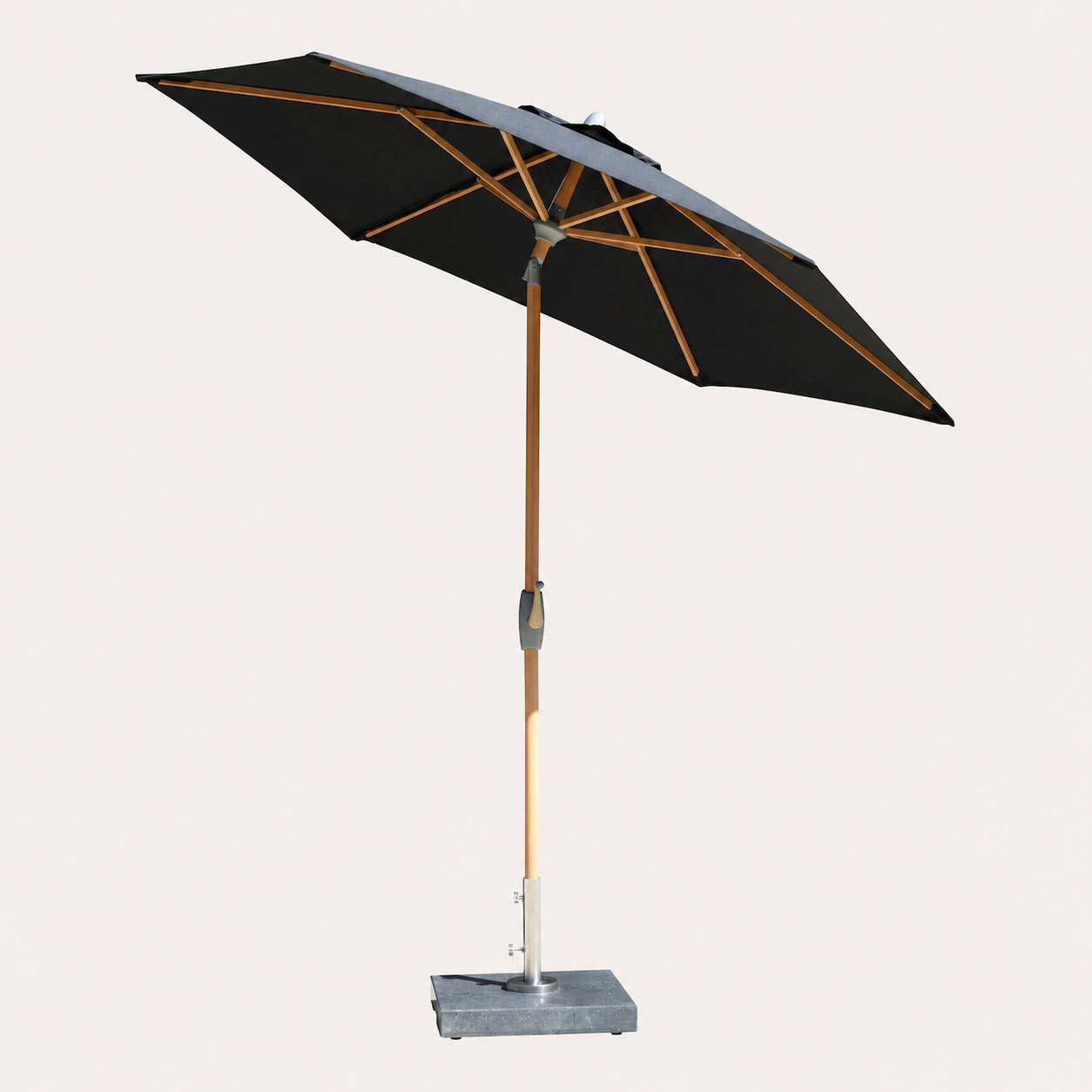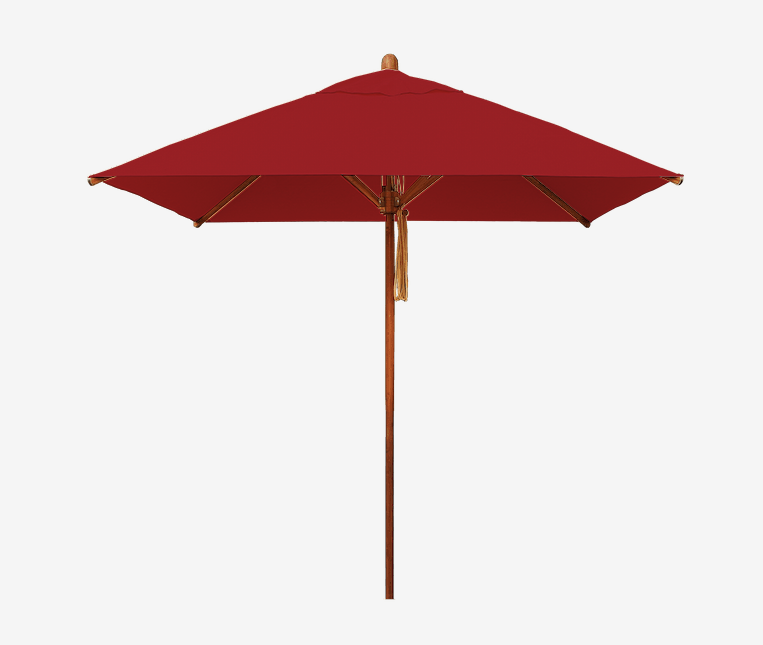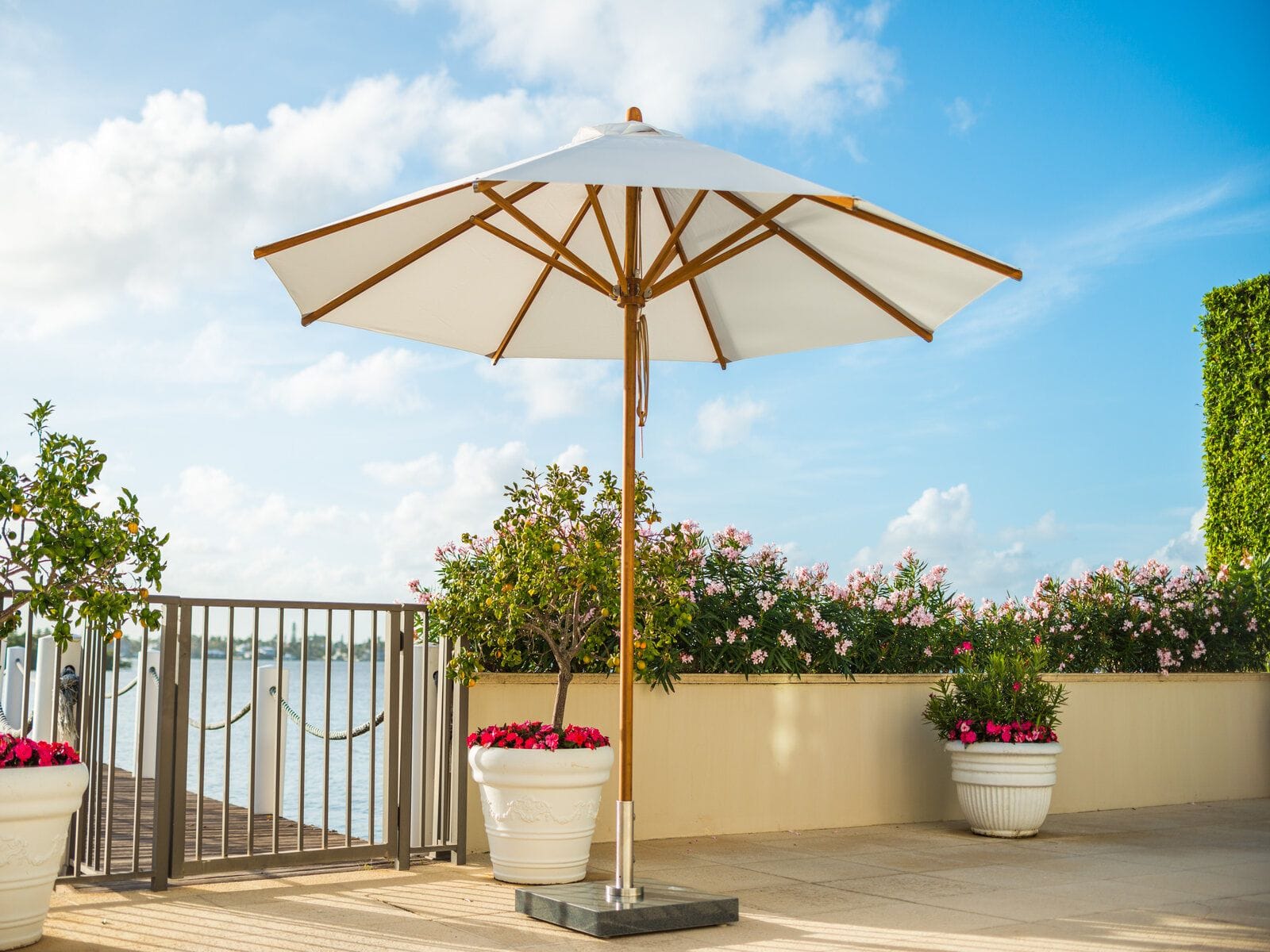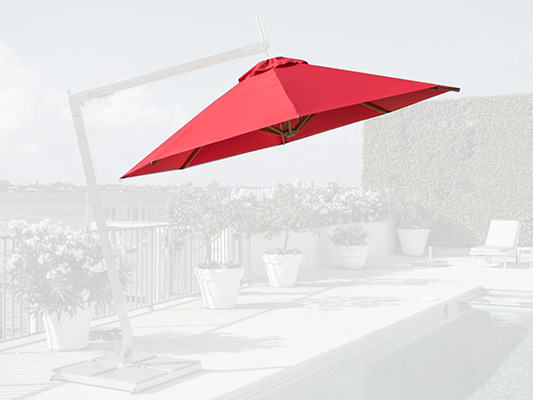
Showing all 15 results

Showing all 15 results
Who this suits

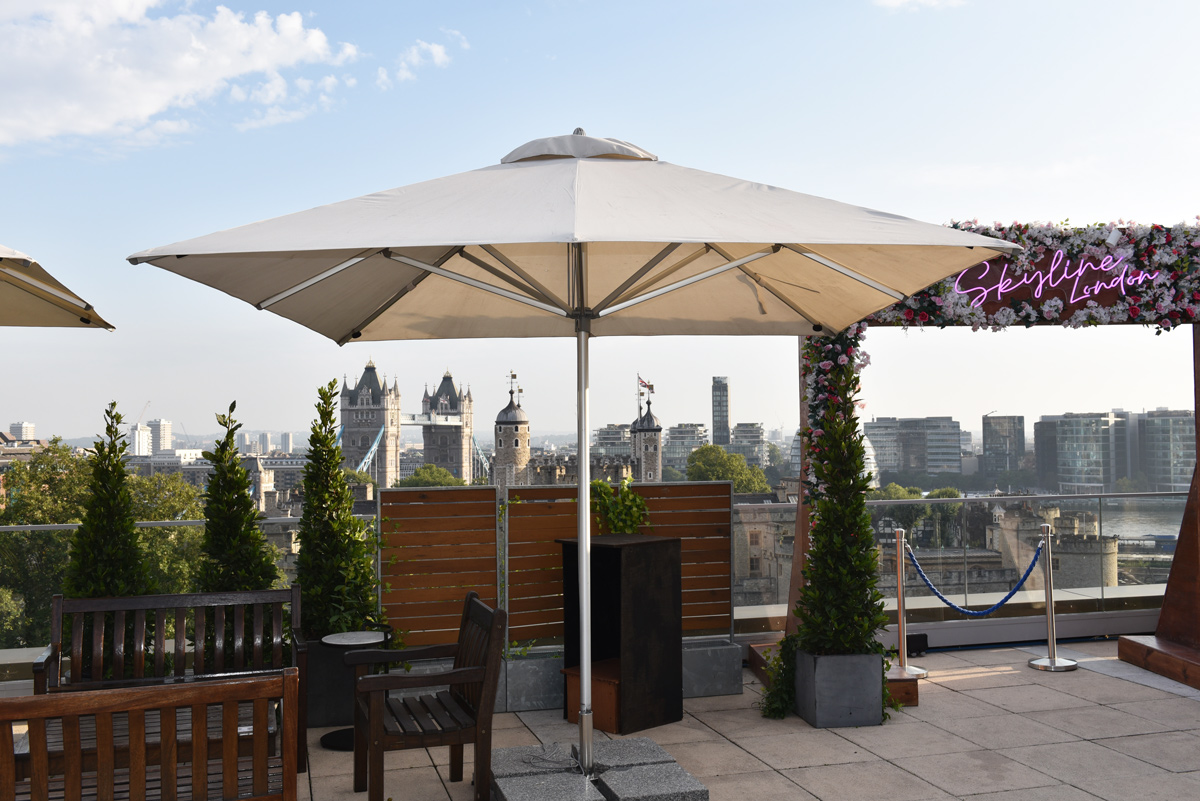
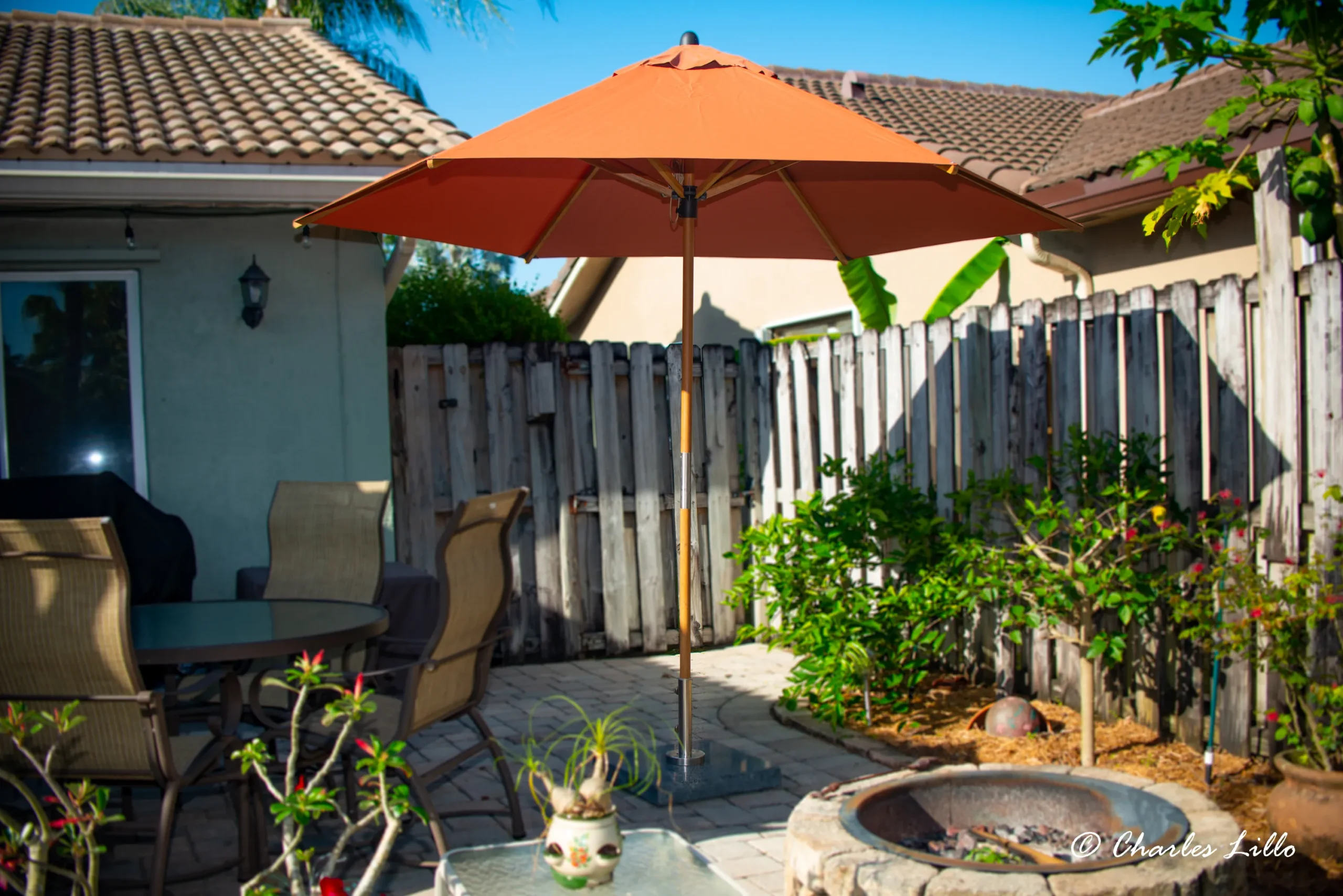
Centre pole garden parasols work best in a specific situation: a fixed dining table, an afternoon sun that follows a predictable path across the garden, and a buyer who wants reliable shade without the footprint and cost of a cantilever system.

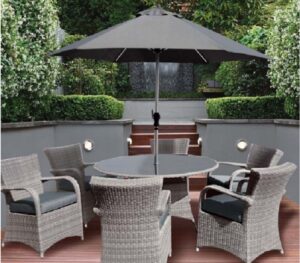
The cleanest setup is a table with a pre-drilled parasol hole in the centre. The pole slots through, the table handles most of the wind load, and you get a stable, symmetrical canopy without needing a particularly heavy base. For freestanding use on a terrace or patio without going through a sturdy table, a properly weighted base gives you the same shade with more flexibility over positioning.

If that matches what you are looking for, you are in the right place. Our garden parasols page covers the full residential range if you want to compare centre pole models alongside other types before deciding. And if you are genuinely unsure whether a centre pole or cantilever design suits your space better, our centre pole versus cantilever guide sets out the key differences clearly.

Our price match guarantee

If you find the same centre pole parasol cheaper from another UK retailer, we will match the price. The guarantee covers our full range, from entry-level push-up models through to premium Bambrella bamboo parasols. Send us a link or written quote from the competing supplier and we will respond quickly.

We offer it because we are confident in what we stock. Every parasol we sell comes from manufacturers with a real track record in outdoor furniture, and every purchase is backed by our product warranty. You do not have to compromise on quality to get a fair price here.

Fast delivery on in-stock models

Most centre pole parasols in our range are held at our UK warehouse and dispatched within three working days of your order. We deliver to the whole of the UK, and beyond. Full details are on our delivery and shipping page.

Made-to-measure models and custom canopy colours have longer lead times. Our team will confirm a lead time when you enquire, so you can plan around it. Finance is available if you want to spread the cost of any value order.

Please note: The final decisions regarding credit applications are made independently by our lending partners. These depend entirely upon your personal credit profile and the criteria of the provider and we do not have any say in the decision made. We recommend reviewing their full terms and conditions carefully before proceeding with any finance option.

Aluminium, bamboo or wood: how to choose the right frame

The frame material shapes how the parasol looks, how much effort it takes to use each day, and how much maintenance it needs over the years. Here is the honest breakdown.

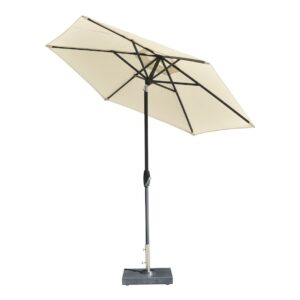
Aluminium is the right choice for most UK gardens. Powder-coated aluminium is corrosion-resistant, easy to open and close, and easy to wipe clean at the start of each season. It handles British winters without special treatment and does its job without asking much of you. If your priority is a parasol that works reliably for years with minimal upkeep, aluminium is almost certainly the answer. Our aluminium parasols cover the full size range from 2m to 4m, with pole diameters and rib gauges selected for structural strength at each span.

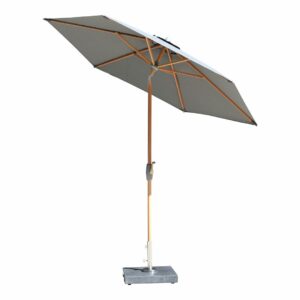
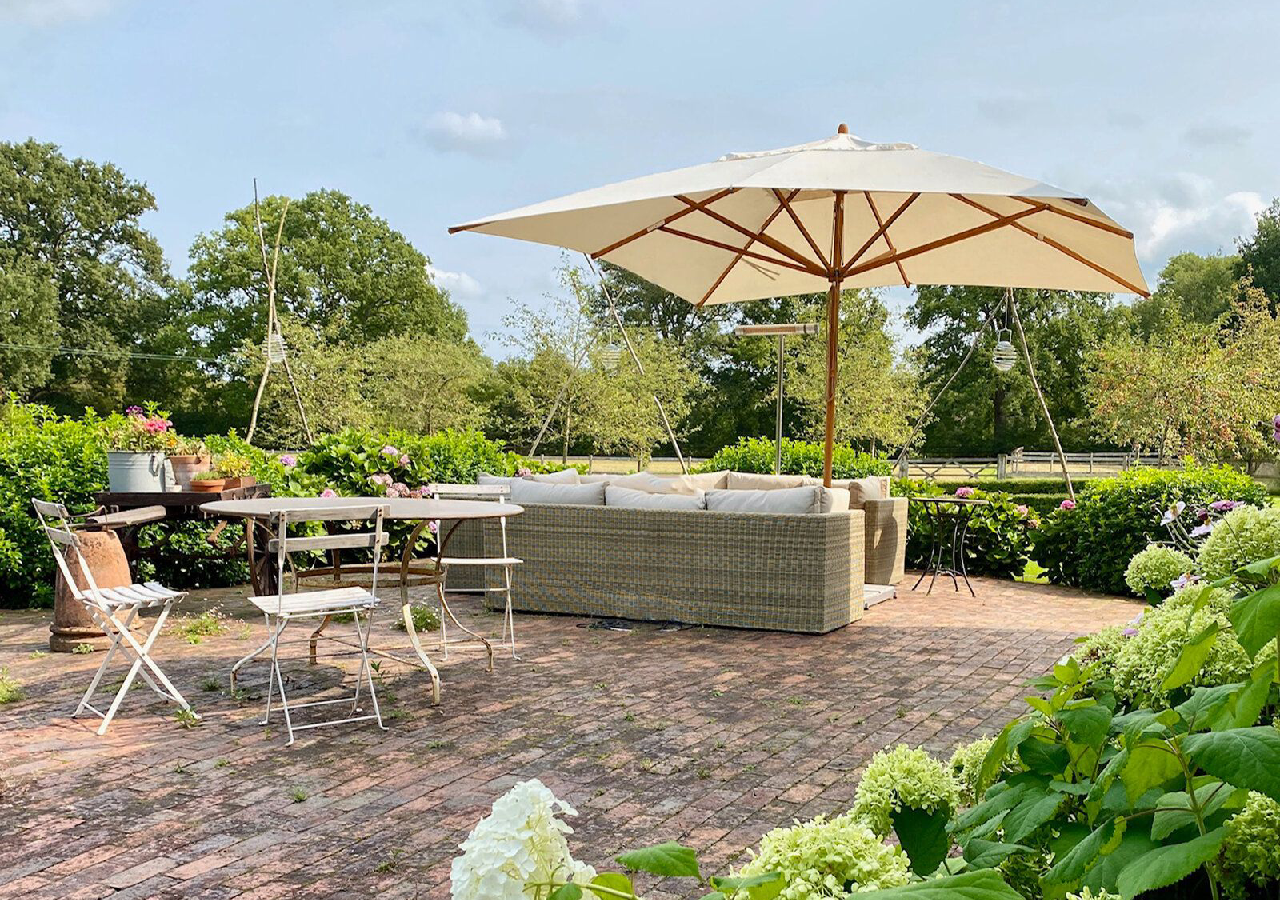
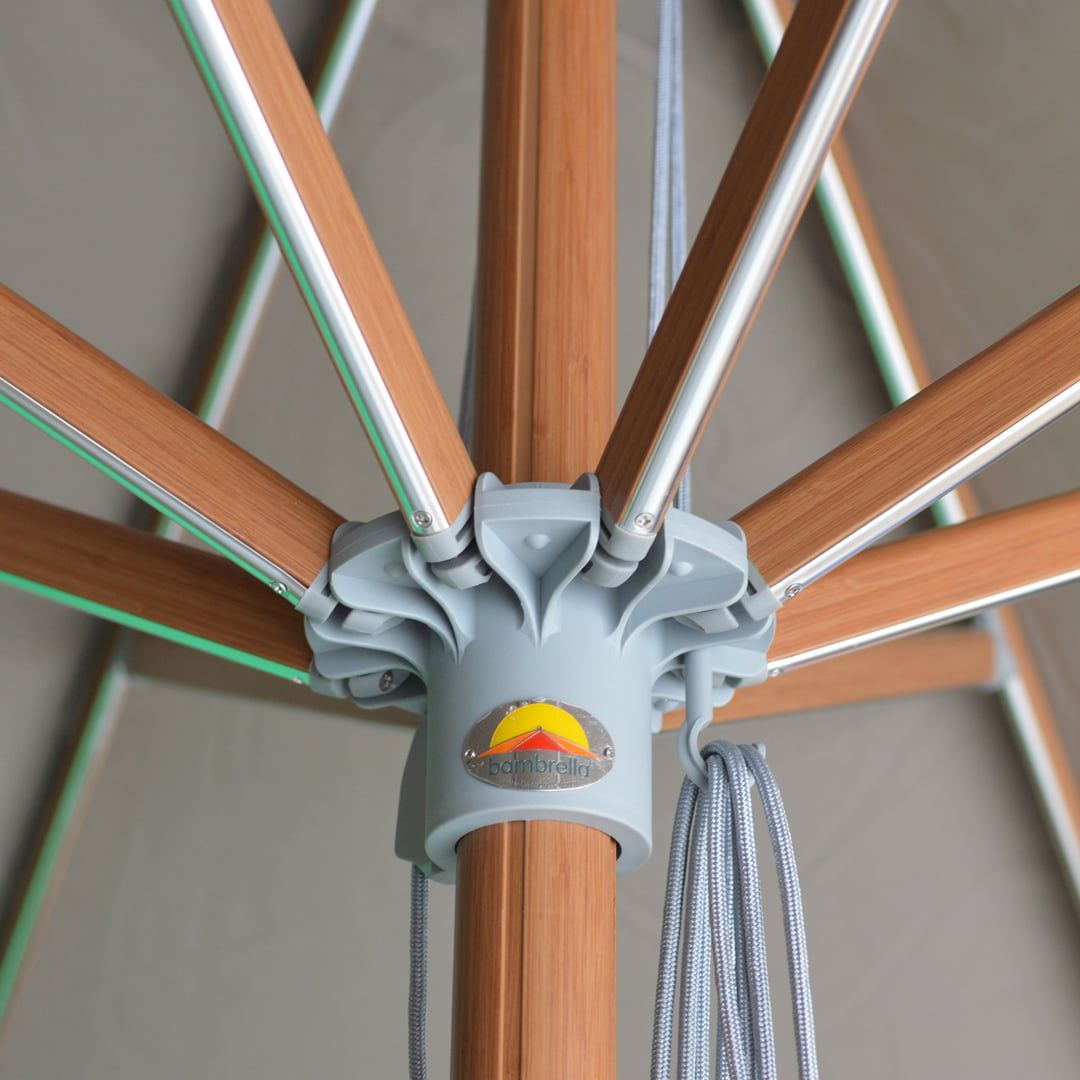
Bamboo and wooden frames suit gardens where aesthetics matter alongside practicality. A bamboo or hardwood pole carries a warmth and texture that aluminium cannot match, and it sits naturally alongside rattan, teak or wicker furniture. The trade-off is minor: a light oiling once or twice a season keeps a wooden frame in good condition for many years, and it ages well. Our wooden parasols include the Bambrella range, which uses FSC-certified timber with a structural durability rating built for genuine outdoor conditions. If you want a centre pole parasol with a natural look that lasts, bamboo is worth the small amount of extra care.

Stainless steel is the most robust option in the range. Heavier than aluminium, but it needs very little maintenance and holds its shape season after season. Our stainless steel parasols suit contemporary gardens with clean architectural lines and buyers who want a premium centre pole parasol they will never have to replace.

Getting the size right when choosing a centre pole parasol

This is the most important decision you will make, and it is worth getting right before anything else. Too small and the canopy leaves guests at both ends of the table squinting. Too large and the ribs overhang awkwardly or catch on plants and adjacent furniture.

The standard rule: the canopy should extend at least 100 centimetres (or 1m) beyond the table edge on all sides to shade seated guests properly. In practice:

A 2m round parasol covers a compact bistro table for two. A 2.5m model sits comfortably over a 4-person dining table in most sun positions. A 3m centre pole parasol works well with a standard 6-person dining set. It is the size we sell most of in our residential range, and for most UK gardens it is exactly what you need. A 4-metre square or rectangular canopy is the right starting point for a table seating eight or more.

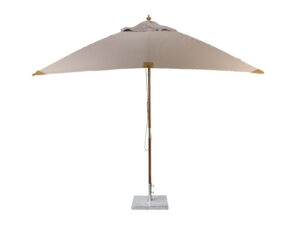
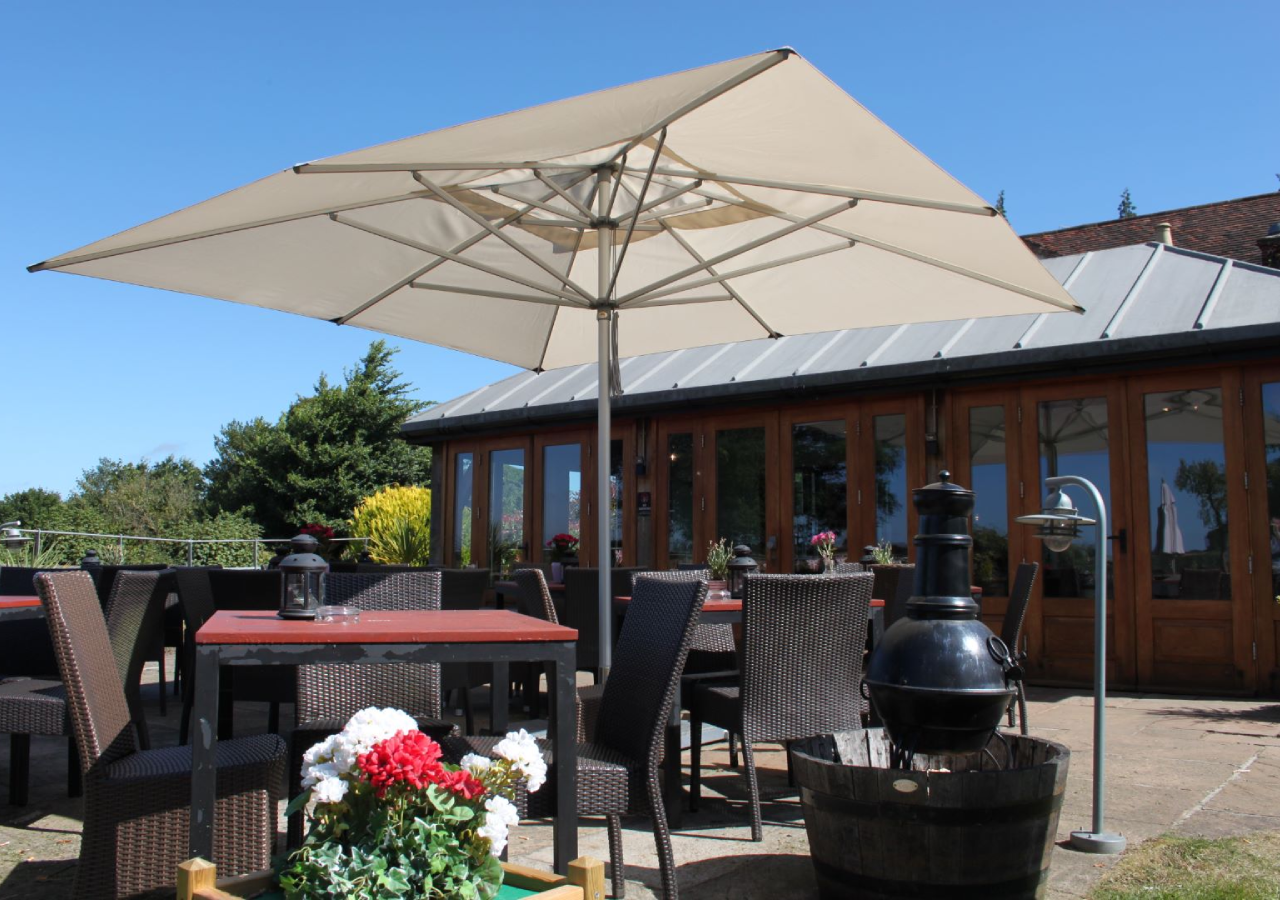
Round canopies suit round or square tables and relaxed, informal layouts. Rectangular canopies follow the shape of a dining set more closely and shade more of the table efficiently across a greater range of sun angles.

Our parasol size and shape guide covers every configuration in detail, including how to account for the movement of shade through the afternoon. If you would rather just tell us your table dimensions and get a direct recommendation, call 01293 226 477.

Push-up, crank and tilt mechanisms

Two things to decide here: how the parasol opens, and whether you want tilt.

Push-up parasols open by sliding a collar up the pole by hand and locking the ribs into position. They are simple, dependable and have fewer moving parts to wear over time. For a 2m or 2.5m model that goes up for an afternoon and comes down before the evening, push-up is a perfectly good choice. It is usually the lighter option, too.

Crank parasols use a wind-up handle on the pole to extend the ribs. For a 3m or 4m pole parasol, the crank is not a luxury, it is the practical choice. A large canopy is heavy when wet or when the ribs are carrying morning dew. Opening it by hand every day starts to feel like unnecessary work by July. Most of the larger models in our range come with a crank mechanism as standard, and for good reason.

Rope and pulley mechanism in a centre pole garden parasol gives you a mechanical advantage, and so it requires less force to raise or lower the canopy. You will have better control over the parasol as you will be able to raise or lower the parasol smoothly and gradually. It is a safer operation as the load is shared through the rope and pulley, avoiding any strains in your arms, shoulders, and back.

Tilt is a separate feature that lets you angle the canopy toward a lower sun, which keeps shade over the table in the morning and late afternoon when the sun is not directly overhead. Not every model includes tilt as standard, so it is worth confirming this when you enquire if your garden’s positioning makes it important.

Canopy colours, fabrics and replacement covers

The colour you choose will be looked at every time you sit outside, which makes it worth thinking through properly. Neutrals, such as ecru, harvest wheat, taupe or beige, work with almost any outdoor setting and hold their look from season to season without dating. A stronger colour, such as navy, terracotta or red, can give a patio a cleaner, more deliberate character when it is chosen to complement the furniture beneath it.

What keeps colour looking right over time is the fabric, not the shade you pick. Our centre pole garden parasol canopies are solution-dyed, meaning the dye runs through the fibre rather than sitting on the surface. That matters in a UK garden: even British summers involve sustained UV exposure over several months, and a surface-printed canopy fades noticeably faster. Most canopies in our range carry a UPF 50+ rating. Our parasol canopy colour guide covers the full palette and explains how different fabrics perform under the specific conditions of a British season.

If your frame is still sound but the canopy has faded or torn, we stock replacement parasol canopies to suit a range of pole diameters and frame configurations (for parasol brands that we sell). Replacing the canopy rather than the whole parasol is almost always the right call when the frame has several seasons left in it. Our canopy material guide covers the fabric options in plain terms if you want to understand the differences before ordering.

Bases and ground fixings: getting this right matters

The base is where buyers most often underestimate what they need, and an undersized base is exactly as stable as it sounds.

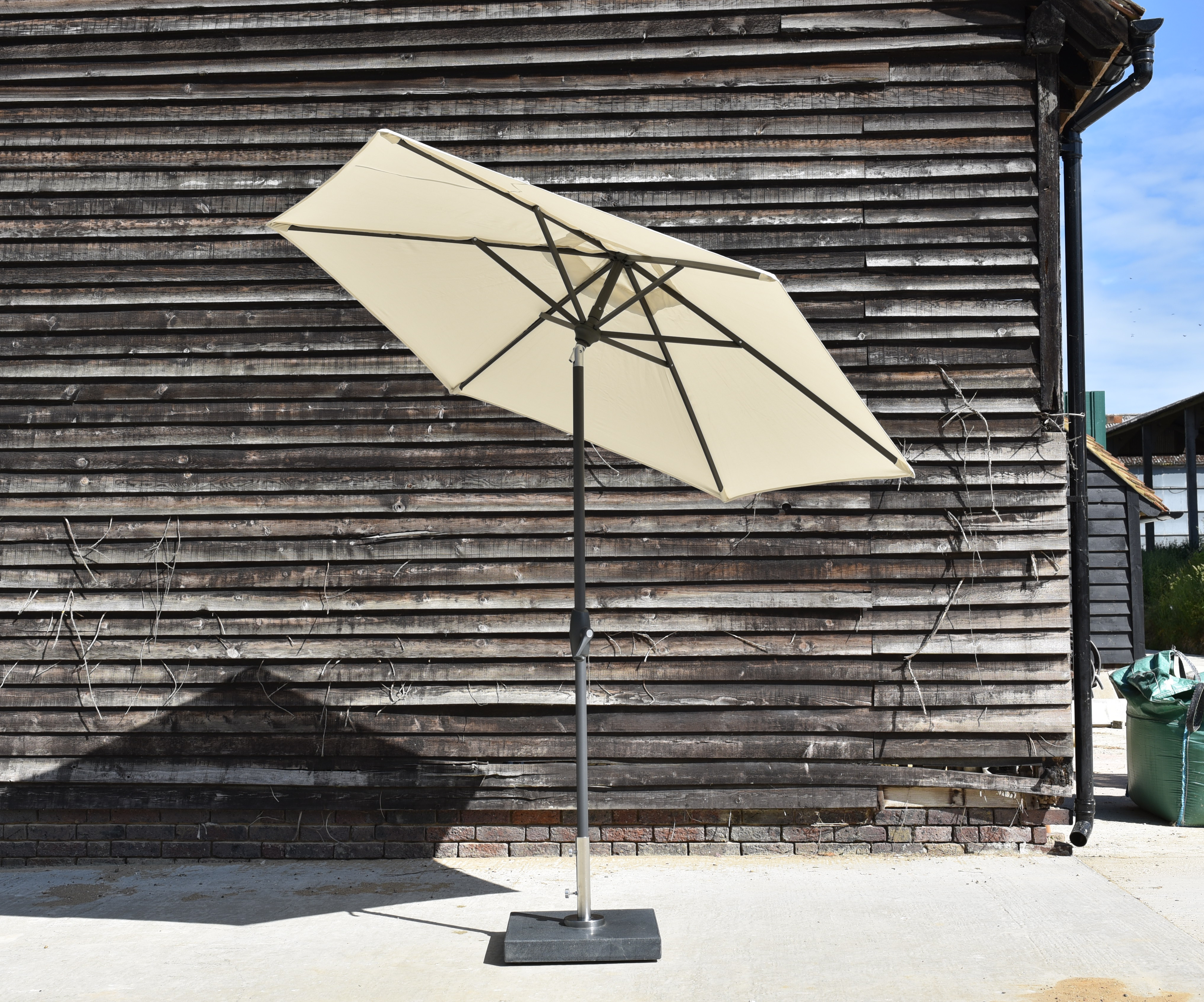
If you use the parasol through a hole in your garden table, the table handles most of the lateral wind load. In that configuration, a base of around 30 – 45 kg is adequate for most parasols up to 3m in a sheltered residential garden.

Freestanding use is a different calculation entirely. A 3m parasol freestanding in an exposed terrace needs a minimum of 50 kilograms of base weight to remain stable in a normal British summer breeze. A 4m centre pole parasol in the same position needs considerably more. An undersized base does not just fall over in a storm. It falls over on a reasonably breezy Tuesday afternoon in August. Getting this right before you buy is far easier than dealing with the consequences after.

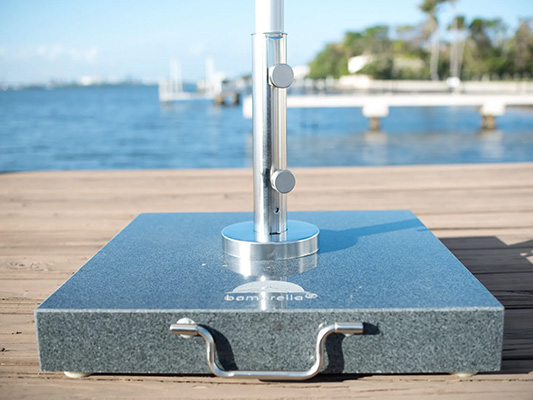
We stock a full range of parasol bases rated for different parasol sizes and site conditions, from compact weighted options for sheltered patios to heavy-duty freestanding bases for more exposed gardens. Our guide to choosing a parasol base walks through the calculation in practical terms. Our guide to selecting a garden parasol with base covers the full decision from size through to fixing method.

For decking or hard surfaces where drilling a ground socket is not an option, a freestanding weighted base with a standard or premium base tube is the most practical solution. Please note that we cannot sell bases without parasols.

Lights, heaters and the longer garden evening

A centre pole garden parasol shades the table through the afternoon. The right accessories extend that into the evening and deep into autumn.

LED lights fitted inside the canopy ribs give a warm, even glow over the table without the harsh shadows from a single overhead point source. They run from a low-voltage supply, clip directly onto the parasol frame, and leave no trailing cables on the surface below. Our parasol lights and lighting guide cover the models we stock and how they fit.

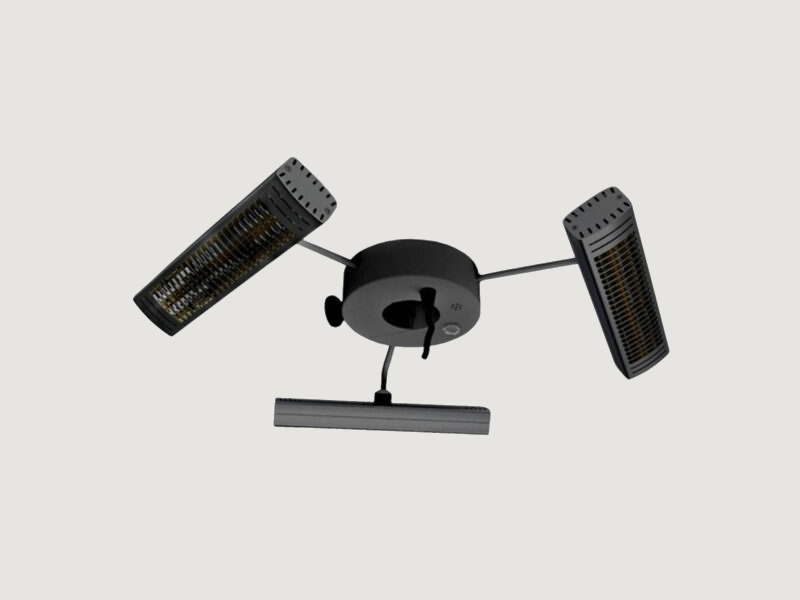
From September onward, a parasol-mounted infrared heater changes a two-hour garden dinner into a four-hour one. Infrared heaters generate warmth within seconds of switching on, are more energy-efficient than gas patio heaters, and fix directly to the pole or frame without any structural modification. Our parasol heaters and heater guide cover the options by canopy size and output level.

Centre pole or cantilever: which suits your garden?

Both types shade a garden dining area well. The choice comes down to how your garden is set up and what you need from the shade structure.

Centre pole parasol

  • ✅ Ideal when your table sits in a fixed position.
  • ✅ Perfect for sheltered gardens and symmetrical layouts.
  • ✅ A clean, cost-effective solution that works beautifully over your table.

Cantilever parasol

  • ✅ Best for open, exposed spaces and larger areas.
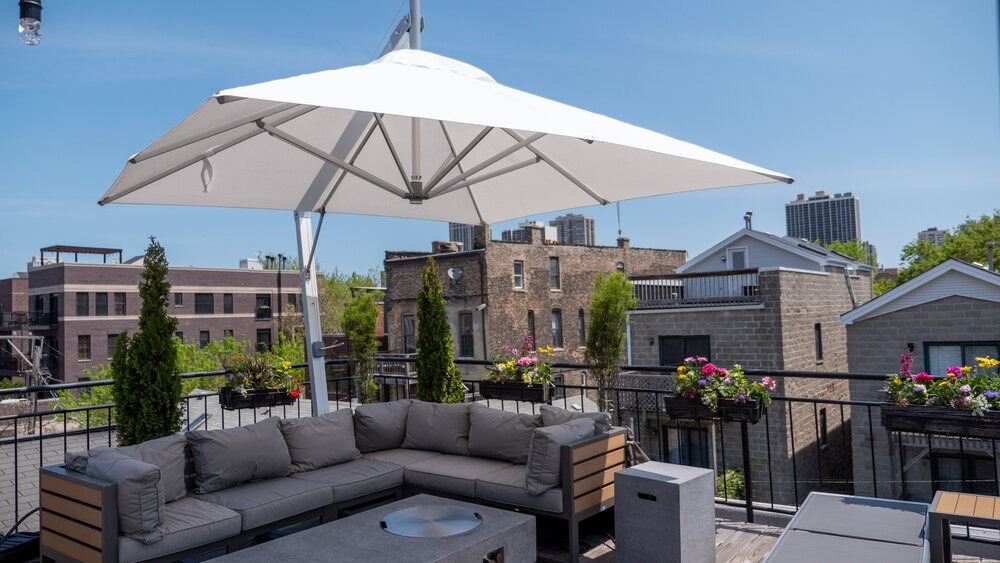
  • ✅ Lets you move your table freely and shade without a pole in the middle.
  • ✅ Requires a heavier base to counterbalance the arm and is usually a higher investment for the same coverage.

For most UK residential gardens with a fixed dining set and reasonable shelter, a centre pole parasol is the simpler, more cost-effective solution. Our cantilever parasols and our comparison guide are both there if you want to review both options side by side before deciding.

Talk to us before you buy

Our team can help you match a centre pole garden parasol to your table dimensions, garden layout and sun position before you order. We advise on frame material, canopy colour, base weight and accessories based on how your specific garden is set up.

Call 01293 226 477 or send a message via our contact page. Our customer help section and Q&A page are worth browsing if you prefer to research before getting in touch. And if you need a parasol for a specific occasion rather than a permanent garden fixture, our hire service covers short-term and event options.

Frequently asked questions

What is a centre pole parasol?

A centre pole parasol has a vertical mast running through its centre that supports the canopy from below. The pole sits either through a pre-drilled hole in a garden dining table or in a freestanding weighted base. It is the traditional garden parasol design and the most common type found in UK domestic gardens. Centre pole parasols are available in diameters from around 2m up to 4m, in aluminium, bamboo and hardwood frames.

The canopy should extend at least 50 centimetres beyond the table edge on all sides to shade seated guests properly. A 2m parasol suits a bistro table for two. A 2.5m model covers a 4-person dining table comfortably in most sun positions. A 3m centre pole parasol is the most popular size we sell and works well with a standard 6-person dining set. For a rectangular table seating eight, start with a 4m square or rectangular canopy. Our parasol size and shape guide covers every configuration in detail, or call 01293 226 477 with your table dimensions and we will give you a direct recommendation.

Yes. If your decking table has a pre-drilled parasol hole, the table handles the wind load and you need only a small base plate or ground ring underneath. For freestanding use on decking where drilling is not possible, a weighted freestanding base is the right solution. Our parasol bases include freestanding options suitable for decking, paving and artificial grass.

A push-up parasol opens by sliding a collar up the pole by hand and locking the ribs into the open position. A crank parasol uses a wind-up handle on the mast to extend the ribs with considerably less effort. Push-up mechanisms work well for parasols up to around 2.5m in regular residential use. For a 3m or 4m centre pole parasol, a crank is the practical choice for daily opening and closing, particularly when the canopy is wet or heavy with morning dew.

For a centre pole parasol used through a garden table hole, a base weight of 25 – 45 kg is adequate for most sheltered residential gardens up to 2.5m. For freestanding use without a table, the minimum recommended base weight for a 3m canopy is 70 kilograms. Larger canopies and more exposed sites require proportionally heavier bases. Our guide to choosing a parasol base explains the calculation in full, and our team can work out the right specification for your exact model when you call.

Most centre pole parasols in our range are not supplied with a storage cover as standard, though covers are available as an accessory. Using a cover when the parasol is not in use protects the canopy fabric from UV degradation, keeps the ribs dry during prolonged rain, and extends the life of the canopy significantly. We recommend using one whenever the parasol is closed for more than a day or two.