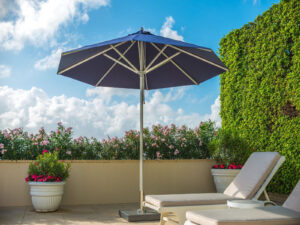
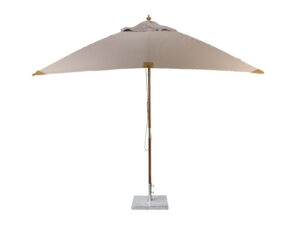
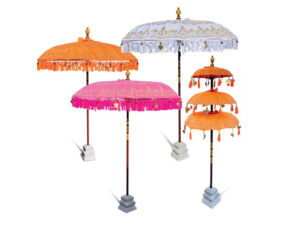
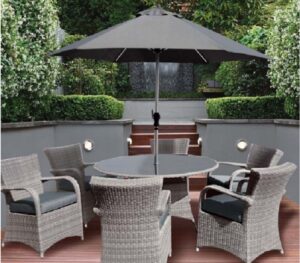
Round parasols are a versatile choice for garden dining, lounge areas, fire pits, and commercial terraces. Centre-pole models suit dining tables, cantilever parasols keep the space underneath unobstructed, and larger jumbrellas provide wide coverage for groups and hospitality settings.
Choosing the correct canopy size and base weight is essential. A parasol should extend approximately 0.5 m beyond the furniture on each side, while cantilever models require considerably heavier bases because of the additional turning force created by the offset canopy.
Canopy fabric and frame construction also affect durability. Polyester provides an affordable option, while solution-dyed and premium acrylic fabrics offer stronger resistance to fading and weather exposure. For parasols larger than 3 m, an eight-rib frame generally provides better shape and wind-load distribution.
Round parasols suit dining, lounging, and large gatherings equally well. For a 4-seat dining table, a 2.7m to 3m canopy works. For a fire pit or corner seating group, a jumbrella at 5m or more gives everyone equal shade. Centre pole, cantilever, and jumbrella types are all available in 6-rib or 8-rib builds. Frames are powder-coated aluminium or hardwood. Canopies range from budget polyester to solution-dyed acrylic that resists fading for 5 to 10 summers.
Three ways to shade a round space
The shape of your garden, the furniture underneath, and whether you want a pole in the middle all point you toward one of these three types.
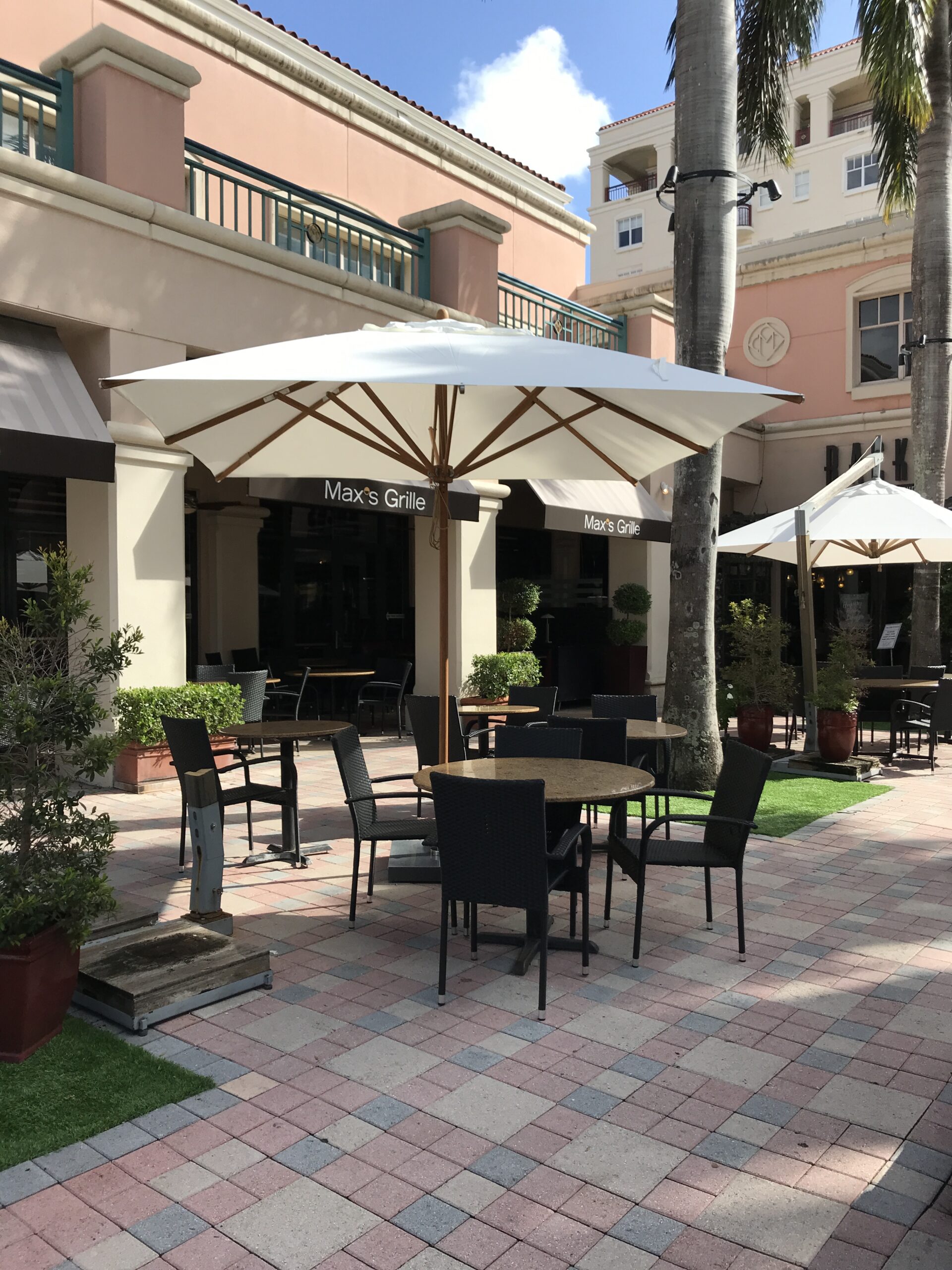
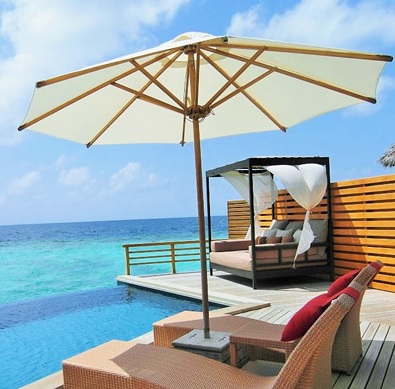
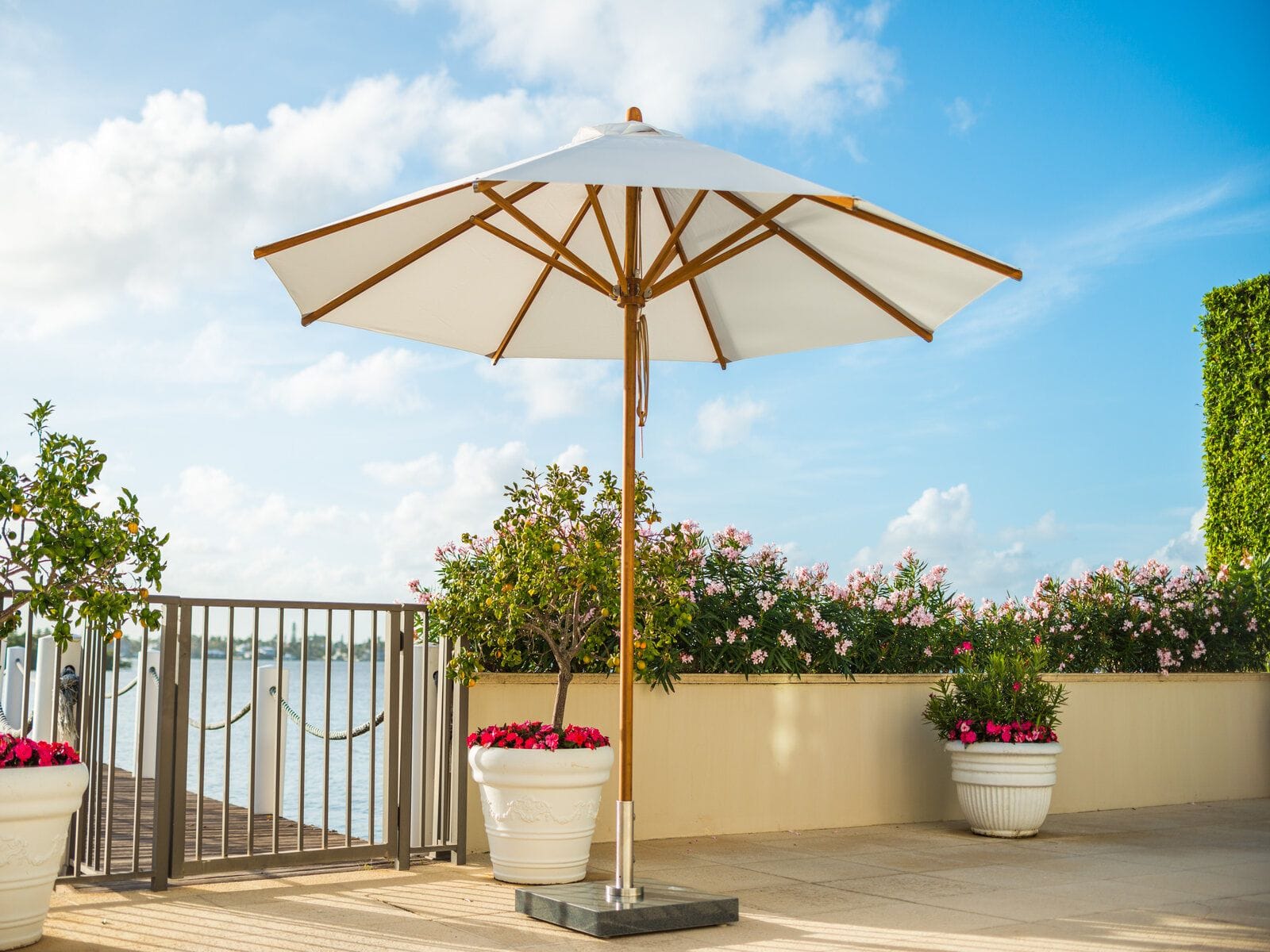
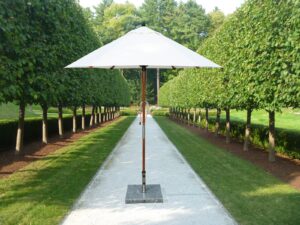
Centre pole parasol
A single pole runs up through a hole in the table or sits in a freestanding base at the centre. Stable, simple to open and close. Works with most standard round dining tables.
Best for: dining, 2 - 6 seats
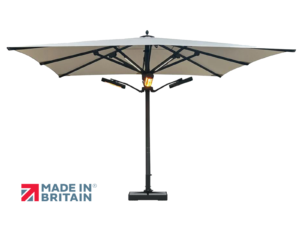
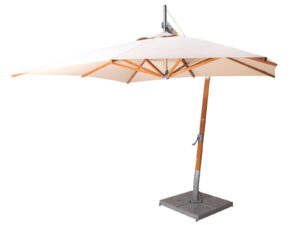
Cantilever parasol
The pole stands to one side and the canopy hangs outward from an arm. No pole in the centre of your table or seating group. Tilts and rotates to follow the sun. Needs a heavy base.
Best for: loungers, corner seating
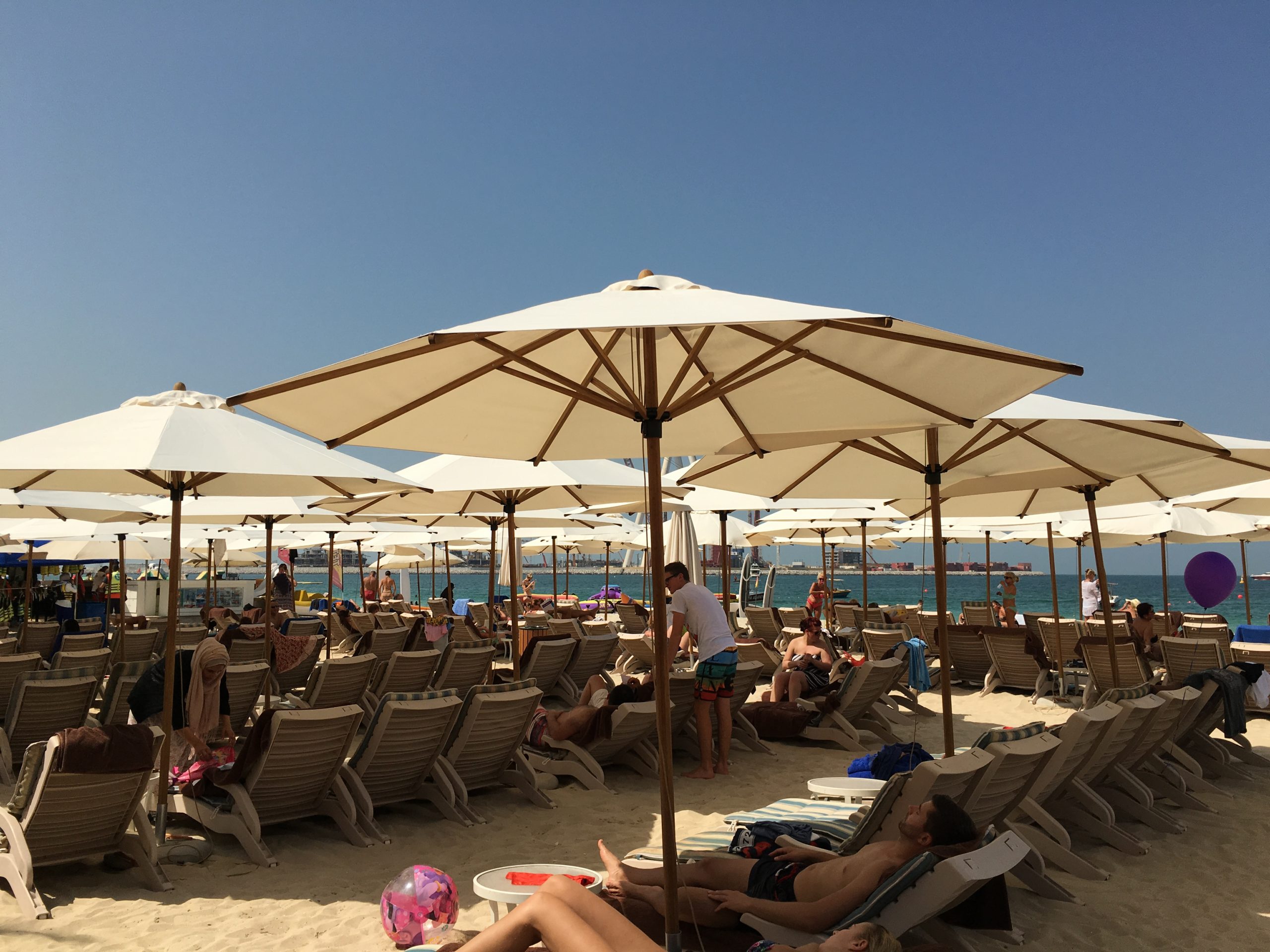
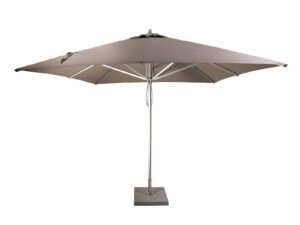
Jumbrella
A commercial-grade oversized parasol on a weighted ground spike or large base. Canopies from 4m and onwards. Covers entire dining or lounge areas. Popular for terraces, hospitality, and large gardens.
Best for: large groups, commercial
How to choose the right size
The rule of thumb is to add 0.5m on each side of the furniture you want to cover. A 1.5m round table needs at least a 2.5m canopy. Go larger if you want shade for chairs pulled back from the table.
The shaded footprint shrinks as the sun rises. These figures are approximate midday measurements in the UK at peak summer.
Centre pole vs cantilever vs jumbrella
Round parasols look similar in photos. The real differences come down to pole placement, base requirements, and how they interact with what’s underneath them.
The spatial logic of a round canopy
Rectangular parasols have corners that jut into garden pathways. Round canopies don’t. The curved perimeter lets people walk around a table or lounge set without ducking under low canvas edges. The ribs extend equally from the centre, so the shade falls in a circle, which mirrors round dining tables, fire pit conversation zones, and curved rattan sets perfectly. Everyone gets equal coverage. Nobody’s baking at the end of a rectangular shadow.
Centre pole: the reliable workhorse
Pass the central mast through a hole in a heavy dining table and the table itself acts as a stabiliser, reducing the base weight you need by around 30 to 40 per cent. No table hole? A weighted base of 30 to 50kg keeps a 3m centre pole canopy stable in normal British wind. The limitation: the pole is always in the middle of your space. While this configuration is ideal for dining, it is generally less practical for lounge areas.
Cantilever: no pole in your way
The primary advantage of this design is that the support arm extends from the side, keeping the area underneath entirely unobstructed. However, this configuration introduces a significant engineering challenge: torque. Because the canopy functions like a sail at the end of a long lever, a 3m round cantilever model exerts substantial turning force on its foundation. Stability requires a minimum of 80 to 100kg weights, often provided by four 25kg weights or a sand-filled base. Without this heavy counterweight, a standard 10 to 15 mph breeze (common during a British summer) is enough to cause the parasol to topple.
Jumbrella: when scale matters
Constructed with a heavy-duty aluminium or steel pole, jumbrellas are anchored by a permanent ground socket or a substantial ballasted base. These oversized units feature canopies typically ranging from 4m to 5m, allowing them to shade an entire terrace. While designed for commercial environments, they are equally effective in expansive private gardens. Operation usually involves a heavy-duty crank and because of their large size, installation requires at least two people.
The base weight you actually need
Most parasol listings bury the base weight requirement in small print. Here’s the full picture, without guesswork. Understanding the leverage problem is essential. A 3.5m round canopy represents a significant surface area; even a light 10 mph wind generates substantial kinetic lift at the top of the mast. Cantilever designs further complicate this issue, as the turning moment – the specific torque experienced at the base – is considerably greater than that of a centre pole parasol of an equivalent size.
Parasol type
Canopy size
Min. base weight
Notes
Centre pole (freestanding)
2.5m – 3.0m
30 – 50kg
Use flat cross base or paving weight frame
Centre pole (through table)
2.5m – 3.5m
20 – 35kg
Table ring reduces required ballast by ~35%
Cantilever
3.0m
80 – 100kg
Four 25kg paving weights; do not underweight
Cantilever
3.5m
100 – 120kg
Sand-filled base frame recommended
Jumbrella
4m – 5m
Ground socket or 150kg+
Permanent installation preferred
The through-table safety rule: threading a centre pole through a heavy stone or hardwood dining table reduces the required base weight by roughly 30 to 40 per cent. The table ring acts as a secondary stabilisation point and distributes lateral force across a wider footprint.
Why the price difference is real
Two 3m round parasols can sit at opposite ends of the price range and look identical in a product thumbnail. The gap is almost entirely in the canopy fabric.
Polyester
Budget-friendly seasonal shade.
UV resistance
Best for temporary use. Colors will fade within 1–2 seasons
under direct sunlight.

Recommended
Solution-Dyed Acrylic
The industry standard for quality.
UV resistance
Fiber-deep color that resists fading for 5+ years. Excellent
water repellency.
Premium Acrylic
Unrivalled architectural-grade performance.
UV resistance
10-year fade warranty. Self-cleaning nanotech coatings and
ultimate wind-breathability.
6-rib versus 8-rib
All round parasols at Shade Specialists come in 6-rib or 8-rib configurations. More ribs mean a rounder, tighter canopy shape with less scalloping between the panels – important aesthetically and structurally. An 8-rib parasol distributes wind load more evenly across the frame. For anything above 3m, an 8-rib build is the better choice.
How the opening mechanism affects daily use
A parasol you can open one-handed in thirty seconds gets used every day. One that requires two people and a ten-minute negotiation with a rope pulley stays in the garage.
Pulley & pin
Classic rope-pull system with a pin lock. Reliable. No moving parts to break. Requires arm strength for larger canopies. Best suited to 2m to 2.5m parasols.
Crank handle
An internal cord winds around a drum as you turn the handle, raising the canopy smoothly. This operation method on a 3m parasol is genuinely easy to open. Look for die-cast aluminium crank housings – plastic ones crack under tension after a season or two.
Push-button tilt
A hinge partway up the pole lets the canopy tilt to follow a low evening sun. You press a button near the hinge and manually angle the canopy. Practical but requires reaching up the pole.
Auto-crank tilt
Continue cranking after the canopy is fully open and the parasol automatically tilts. No reaching up. No second operation. A significant accessibility advantage, particularly for larger canopies or anyone with limited mobility.
Frequently asked questions
What weight base do I need for a 3m round cantilever parasol?
A minimum of 80 to 100kg. Four 25kg heavy weights in a cross-base frame is the standard setup. Using less is a genuine safety risk — a 3m canopy at the end of a cantilever arm exerts significant turning force on the base even in moderate wind.
Is an 8-rib parasol better than a 6-rib?
For parasols above 3m, yes. Eight ribs distribute wind load more evenly and produce a rounder canopy shape. For smaller 2.5m parasols, 6-rib construction is perfectly adequate and costs less.
How long does a solution-dyed acrylic parasol last?
Five to ten years before any significant fading is typical in UK conditions. The colour runs through the core of each fibre rather than sitting on the surface, so UV cannot bleach it out layer by layer the way it does with standard polyester.
Can I use a round parasol without a table?
Yes. A freestanding base works for centre pole parasols. You’ll need more ballast weight than a through-table setup, roughly 35 per cent more because the table ring is no longer providing secondary stabilisation. For lounger or conversation seating, a cantilever is the better option as it leaves the space underneath completely clear.
Why are some parasols so much more expensive?
Mostly fabric. A budget polyester parasol and a premium solution-dyed acrylic parasol can look identical in a thumbnail. The acrylic one costs more because the manufacturing process locks colour into each fibre before weaving — a process called solution dyeing. The result is a canopy that doesn’t fade, handles heavy rain, and stays waterproof for years longer.
Which round parasol suits a fire pit?
A cantilever or a jumbrella. Both keep the centre of the seating area completely clear. For a typical 6 to 8 seat fire pit arrangement, a 3.5m cantilever or a 4m jumbrella gives even shade coverage without the pole competing with the fire pit for the centre of the group.
Not sure which parasol is right for your space?
Tell us about your garden – size, furniture, and how much sun it gets; we’ll point you to the right type, size, and base weight.
Free advice
UK delivery
Genuine warranty
Expert Advice & Custom Canopies
Not sure which round parasol will work best for your space? Tell us about your garden size, furniture layout, seating requirements, and sun exposure. Our team will help you choose the right parasol type, canopy size, rib configuration, and base weight.
Whether you need a centre-pole parasol for dining, a cantilever model for unobstructed shade, or a large jumbrella for a terrace or commercial setting, we can recommend a practical and safe solution for your requirements.