
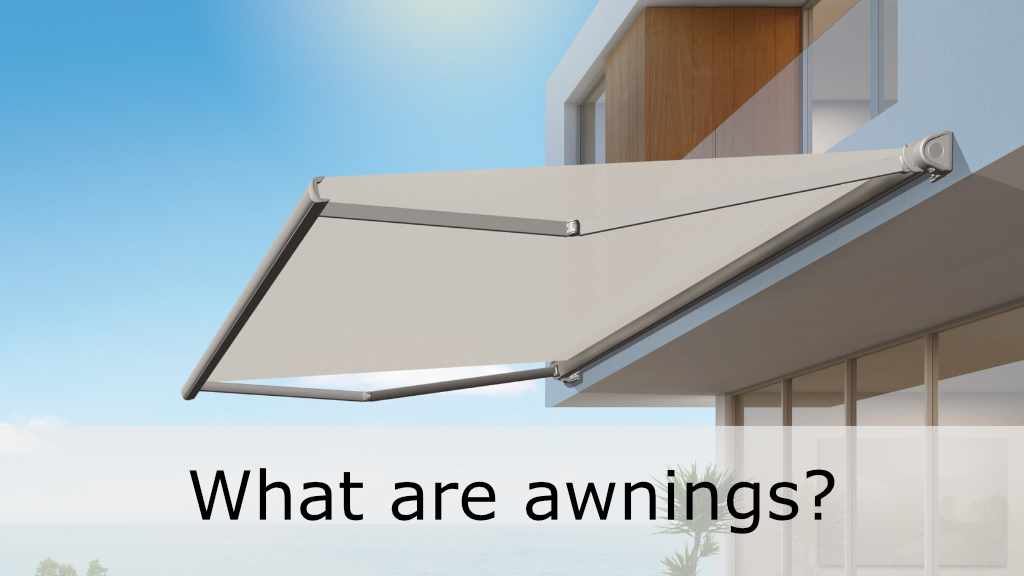
Awnings are fantastic shade solutions for several reasons. These include weather protection for your guests, customers and also your furniture. There are more types and versions of awnings now than ever before, and there’ll be several that will meet your requirements.
You can have retractable awnings, permanent awnings, modern awnings or traditional awnings, therefore it’s a huge benefit when creating the aesthetics of your living space/hospitality areas and creates massive kerb appeal for passers-by.
Enabling you to maximise the usability of your outdoor space, it’ll add value to your property, entice more customers to visit and allow you to take the inside-outside at the click of a button.
With UV protection and lower heating and cooling costs, it’ll help protect you from the elements, whatever the weather, and will do so whilst complimenting your property/business.
What are awnings used for?
Awnings are secondary coverings either attached to buildings or on a free-standing frame, and they have many purposes that are both practical and aesthetic:
- Sun protection and shade – they help reduce direct sunlight on storefronts, patios and windows. Within the shade they help reduce glare and keep indoor spaces cooler.
- Protection from the elements – awnings can protect from light wind, snow and rain. Alongside this, they help protect outdoor furniture and passages from weather damage.
- They are energy efficient – indoor temperatures and air-conditioning costs can be reduced heavily, just by the awnings blocking heat from the sun.
- Outdoor living space – awnings allow you to create the perfect outdoor ambiance for dining, relaxing and entertaining. Typically, these would be created over balconies, patios and decking areas.
- Branding and business visibility – storefront awnings are perfect for enhancing curb appeal and to attract customers (repeat and new). These awnings are able to display business names, logos and slogans.
- Aesthetic appeal – awnings make buildings look unique and interesting, which in turn makes your building stand out compared to others in your surroundings.

What materials are awnings made of?
When it comes to awnings, they need to be made of the very best materials to ensure safety and quality. Depending on your budget and the size of the awning, the materials will vary, but each have promising benefits:
Fabric awnings:
- Acrylic fabric – it’s known for its extreme resistance to colour fading, damage from UV rays and also mildew. The fabric is also breathable and long-lasting (if looked after).
- Solution-dyed polyester fabric – minimal fading of the fabric, water resistant and very easy to clean – perfect for humid or rainy parts of the world.
Frame/Structural components:
- Aluminium frames – these are rust-free and lightweight, which means they are easy to manage and maintain.
- Steel frames – stronger metal, but known to be heavier – however, these are usually galvanised or coated, which helps when you want to personalise the colour of the frame further to match your branding or outdoor décor.
What are awnings on a house?
There are many different types of house awnings, and it depends on their use and where they need to be placed:

Retractable awnings
These can be extended and retracted manually or with a motor (motors are the most popular if you’re looking for ease of use), and these are perfect for decking areas, over windows, patios and doors.
The advantages here are that you can still be protected from the sun, but with a degree of flexibility, such as how far you extend the awning, they have a longer lifespan than fixed awnings, and they have a beautiful aesthetic appeal.
However, they are more maintenance than fixed awnings, they have a potential for mechanical failure (if they’re not looked after properly) and installation may need to be carried out by a professional.
They all usually come in the form of full cassette or open cassette awnings.

Fixed awnings
Although usually preferred for hospitality/commercial properties, they are permanent structures attached to buildings that are non-retractable, to provide continuous shade and protection from the elements.
Regardless of what time of day it is, they provide constant shade and shelter and the construction of these frames is usually more durable as they’re built to last, using durable fabrics and metal.
The downside to fixed awnings is that there’s a lack of flexibility in its use and it creates a permanent impact to the appearance of your property/building.
What is the difference between an awning and a pergola?
We’ve put together a very easy-to-use comparison of the differences between awnings and pergolas:
Awnings

Awnings are traditionally fabric, or sometimes metal-covered structures, that are attached to an outside wall, usually placed above windows, doors and patio areas, with the aim of providing weather protection and, ultimately, shade.
They can be identified as permanently fixed to a building, made of fabric and metal frames and they can provide full or partial shade and are either fixed, retractable (motorised or manual) and some even come with automatic sensors.
This provides incredible rain and sun protection, and are considered less expensive than pergolas. With the retractable option, you can control how much sun exposure your sheltered areas receive, and are perfect for patios, balconies, windows, beer gardens etc.
However, they must be attached to a solid structure and they do require maintenance from time to time to ensure their longevity.
Pergolas

Pergolas are usually free-standing, open-roof structures made of materials such as wood, vinyl, aluminium or steel. They provide partial shade as the roofs of the pergolas are often slatted or have latticed roofs.
You can add retractable canopies and climbing plants to these structures, too, and the durability is usually very high.
They have a more aesthetic and architectural impact and clearly define outdoor spaces (dining areas, smoking areas etc) and can be customised in terms of accessories (lighting and fans), style, size and what materials it’s made from.
However, they do offer limited rain protection due to the types of roofs they have (but these can be upgraded), they are considered more expensive than awnings and they require more space and, sometimes, permits from the council.
Can awnings handle heavy rain?
Many awnings can handle heavy rain, but not all – there are many factors to take into consideration when choosing the most water resistant awning.
Factors such as the type of material used, how steep the slope is of the awning when fully extended (this is important especially for rain to run off) and how rigid the frame is and whether they are generally designed for all-weather use.
When looking into retractable awnings that are rain-rated, they must be specified as rain-rated and have stronger arms, waterproof material and one that requires a minimum pinch (refers to the points on an awning where moving parts meet stationary parts).
Little things you can do as well is add wind sensors to your awning (if they’re retractable) and retract the awning in storms (unless it’s rated for bad weather) will aid with their water resistance and longevity.
Do awnings add value to your home?
If you install a high-quality awning then yes, they can add value to your home and your commercial property as they perform the following:
- They create functional outdoor spaces, where the awnings can create an ‘outdoor room’ for entertaining, relaxing and dining
- Energy efficiency is increased, as they block heat from the sun (in particular on South and West-facing windows), so this means there’s less need for air conditioning and fans, which can be expensive in the UK
- They protect your property, such as outdoor furniture as they shield them from UV rays, which can be damaging. The fewer UV rays exposed onto your furnishings, the longer the life will be of your belongings
- They add a stylish feature, which makes your property stand out against others
Can I install an awning myself or should I hire a professional?
If you’re extremely handy, installing your own awning could be a DIY project, but it’s usually recommended to employ a professional to do the installation. The decision mainly depends on the size of your awning (the bigger the awning, the heavier and more complex the installation is), how strong and complex your wall structure is, how comfortable you are using tools, and also how many people there are available to carry out the install. Please employ a professional to install if your awning is large, motorised or retractable, if you don’t have experience locating studs and if you would like the awning to be covered under warranty, and also if your awning is to be placed above a ground floor, such as balconies or a high-elevation installation.

