
Showing the single result
-
Rated 5.00 out of 5From
£6,111.11Original price was: £6,111.11.£5,500.00Current price is: £5,500.00. incl. VAT ( £4,583.33 ex. VAT )View Details & Configure


Showing the single result
What grade of stainless steel is best for an outdoor parasol?
Two grades appear in parasol construction. They are not equivalent.
304 Stainless Steel
This is a common standard grade known for its strength and effective corrosion resistance in most conditions. It is well-suited for inland garden settings that experience regular rainfall. Consequently, 304 is the material most frequently utilised in budget-friendly stainless steel outdoor furniture.
316 stainless steel
This grade adds molybdenum to the alloy. That addition gives it meaningfully stronger resistance to chloride corrosion – the primary reason for rust at the coast, by swimming pools, and in urban environments with road salt. This is where the SS 304 grade parasol would eventually show surface corrosion in those conditions, but the SS 316 grade parasol does not show any corrosion at all.
Our range of stainless steel parasols (including the joints, rib connectors, pole sections, and base fixings) uses 316 grade throughout with a mirror polish. We don’t mix grades to reduce manufacturing costs. That consistency is part of why we can offer a five-year structural warranty that covers corrosion damage as well as mechanical failure. Full warranty terms are published on our product warranty page.
Stainless steel parasols for gardens
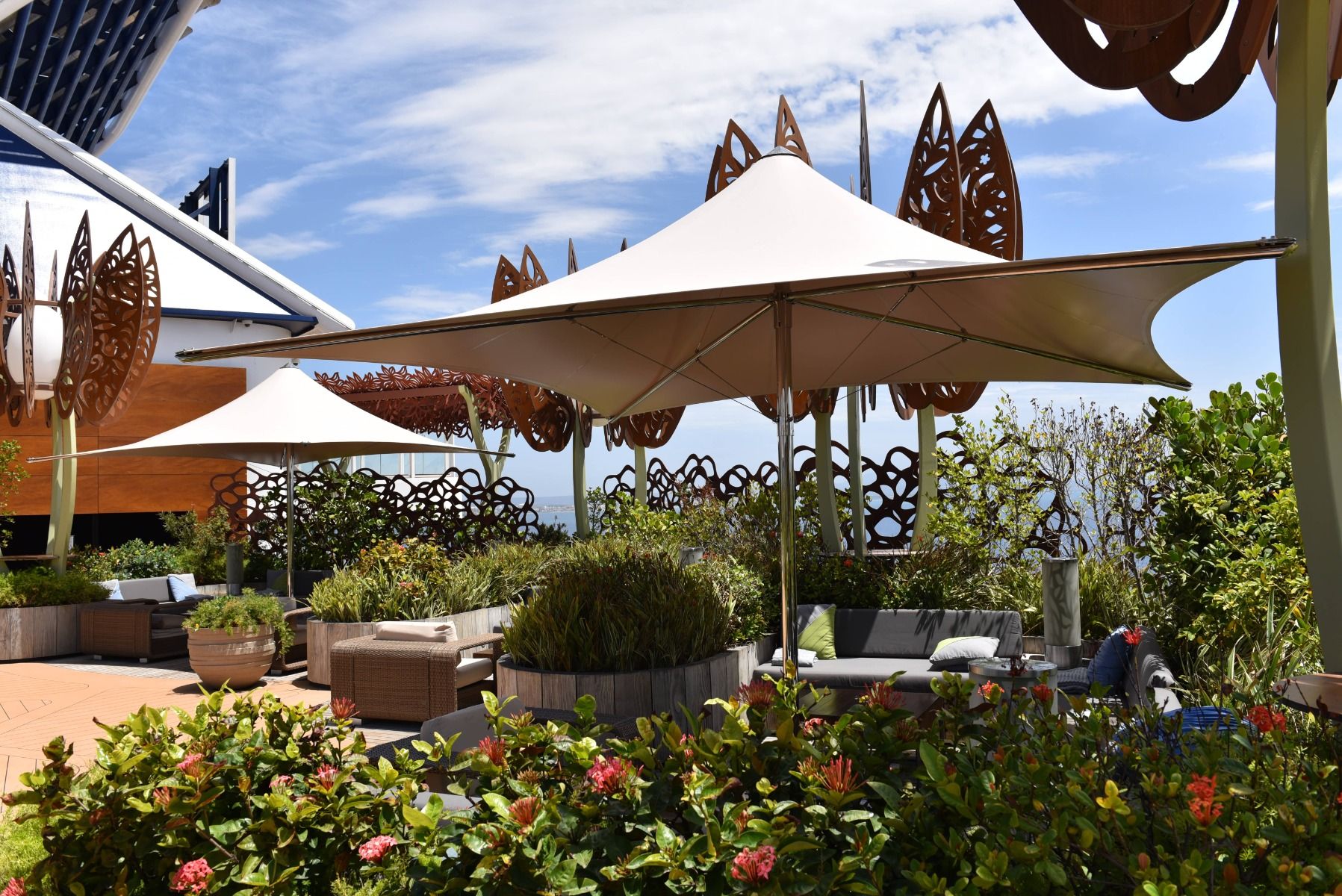
A stainless steel parasol works well in any garden that gets regular use. The brushed finish sits alongside contemporary hard landscaping, stone terracing, and rendered outdoor kitchens without competing for attention. It also doesn’t need the annual maintenance that comes with a wooden pole, such as oiling, painting, or checking for splits at the start of each season.
The canopy does more work than the frame against UV. Our stainless steel range comes with a premium vinyl fabric rated to block over 95% of UV radiation (UPF 50+), which keeps both the canopy colour and the seating area below it protected. Canopy fabric holds colour for five to eight years in typical UK conditions before fading enough to warrant replacement. The steel frame, at that point, is structurally unchanged.
For help choosing between sizes and styles for residential use, our best garden parasol page covers the full range. If you’re deciding between a centre-pole and cantilever design, our guide to choosing a parasol type walks through the practical differences. Size and shape guidance is covered separately in our parasol size and shape guide.
Stainless steel parasols for commercial use
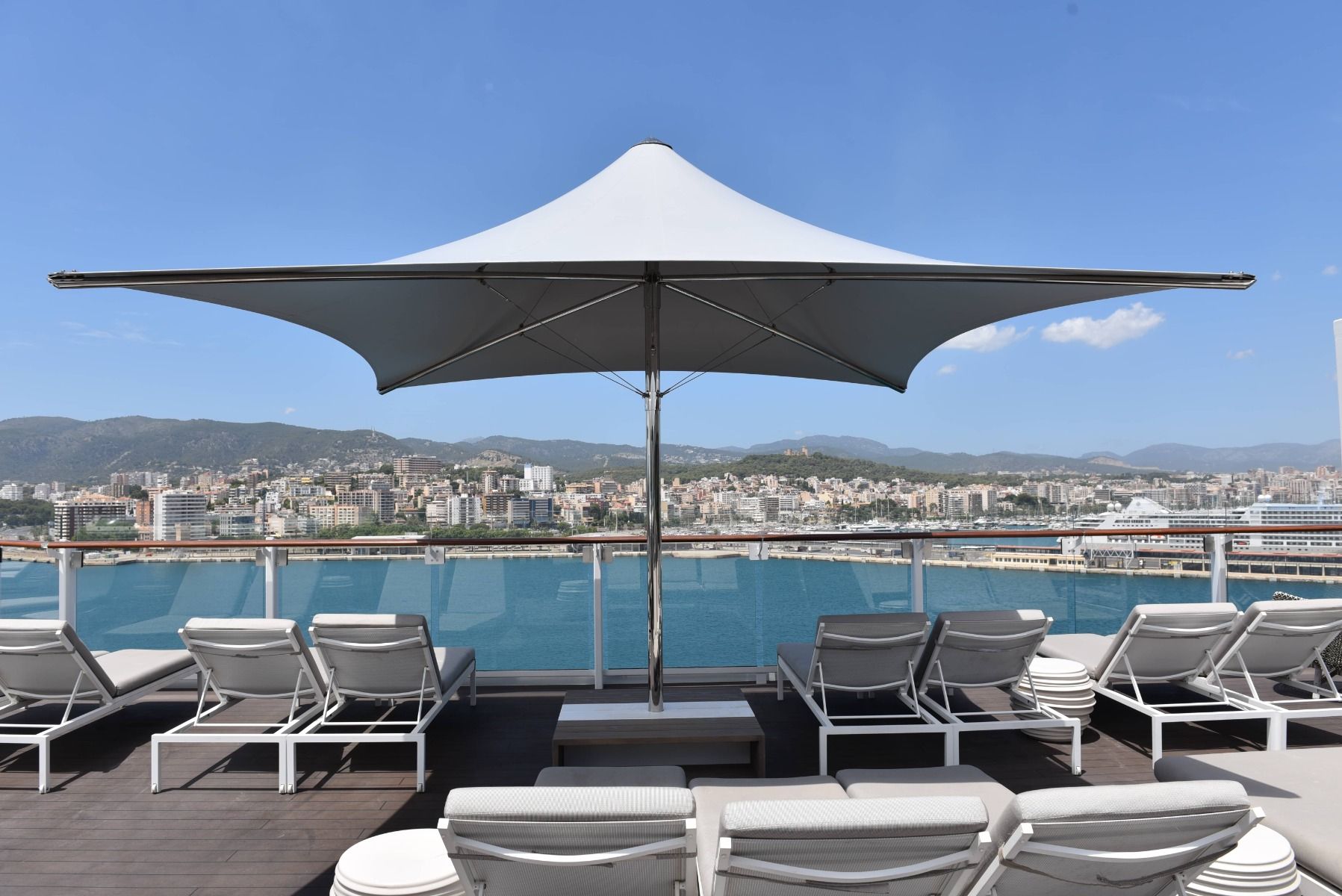
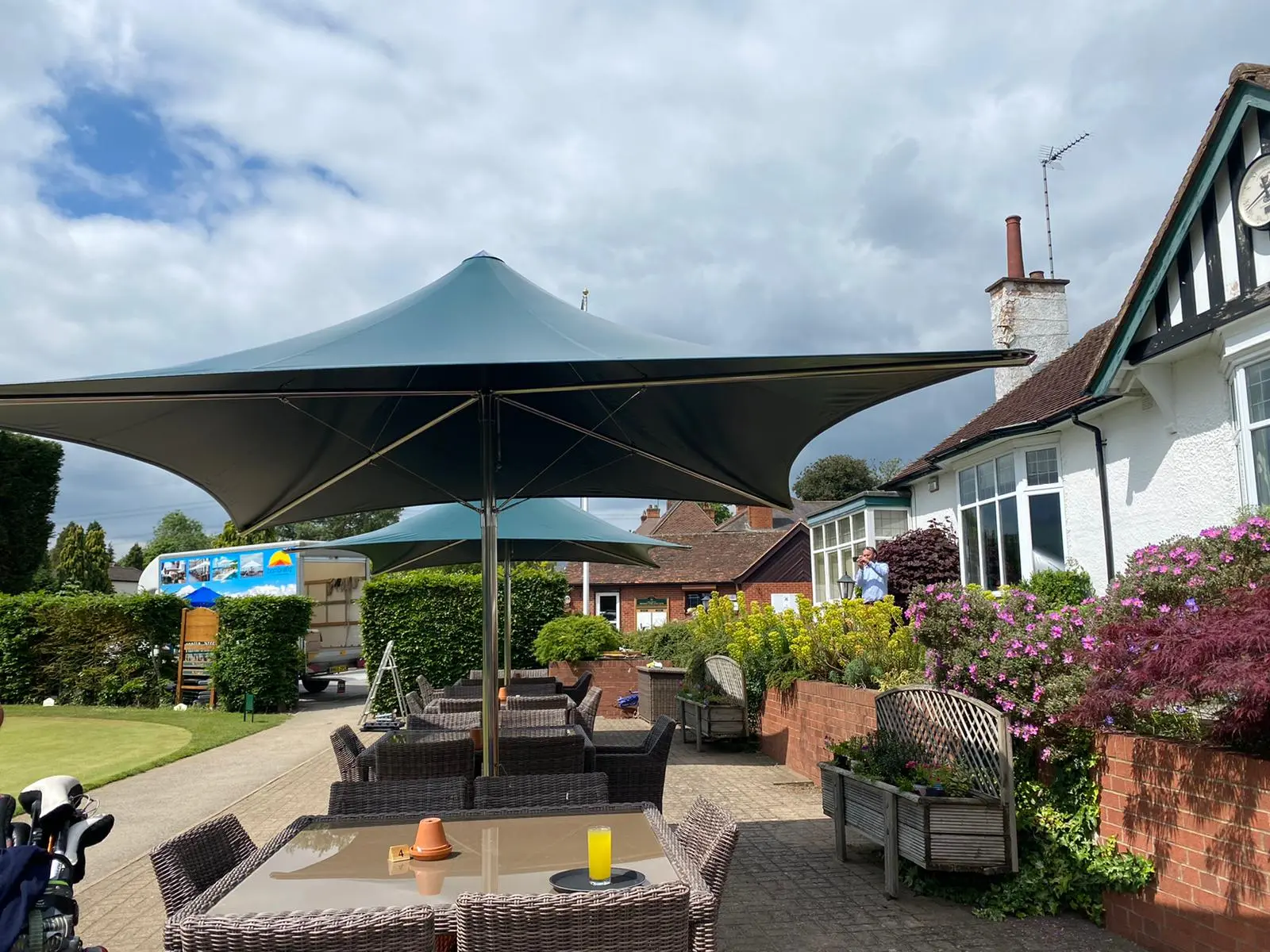
Commercial environments test parasols harder than residential ones. A café terrace operates through wind and rain, often without anyone closing the parasol at the end of service. Pub beer gardens see hundreds of contact points each week with tables bumping poles, chairs catching base flanges. Hotel pool decks and rooftop bars need shade structures that look sharp year after year, not something that needs touching up between seasons.
Stainless steel handles all of this better than powder-coated aluminium because the corrosion protection isn’t a surface coating. There’s nothing to chip, bubble, or require repainting when a table catches the pole. Cleaning is straightforward – a wipe-down with a damp cloth, not a maintenance programme. Shade Specialists supply stainless steel commercial parasols to restaurants, cafés, pubs, hotels, golf clubs, and rooftop venues across the UK. Both single-unit and bulk orders are available, with installation support for permanent fixings.
Most commercial clients in high-traffic positions specify the Bambrella Hurricane Extreme that is tested to 126 km/h and available in sizes from 3m to 5.8m. For branded use, we also supply custom-printed canopies fitted to stainless steel frames.
Stainless steel vs aluminium parasols: how do they compare?
Aluminium is lighter and cheaper upfront. For low-use residential settings away from the coast, that trade-off can make sense. For any commercial setting, or any garden within a few miles of saltwater, the economics shift, the stainless steel parasol pays back the price difference before the first aluminium replacement is needed.
Key differences: 316 stainless steel versus powder-coated aluminium
| Property | 316 stainless steel | Powder-coated aluminium |
|---|---|---|
| Corrosion protection | Inherent to the alloy | Depends on coating integrity |
| Coastal and poolside suitability | Yes | Not recommended |
| Routine maintenance | Wipe clean | Periodic coating touch-up |
| Weight | Heavier | Lighter |
| Expected commercial lifespan | 10–15 years | 3–7 years |
| Structural warranty (Shade Specialists) | 5 years | 2–3 years (typical industry) |
Do stainless steel parasols need maintenance?
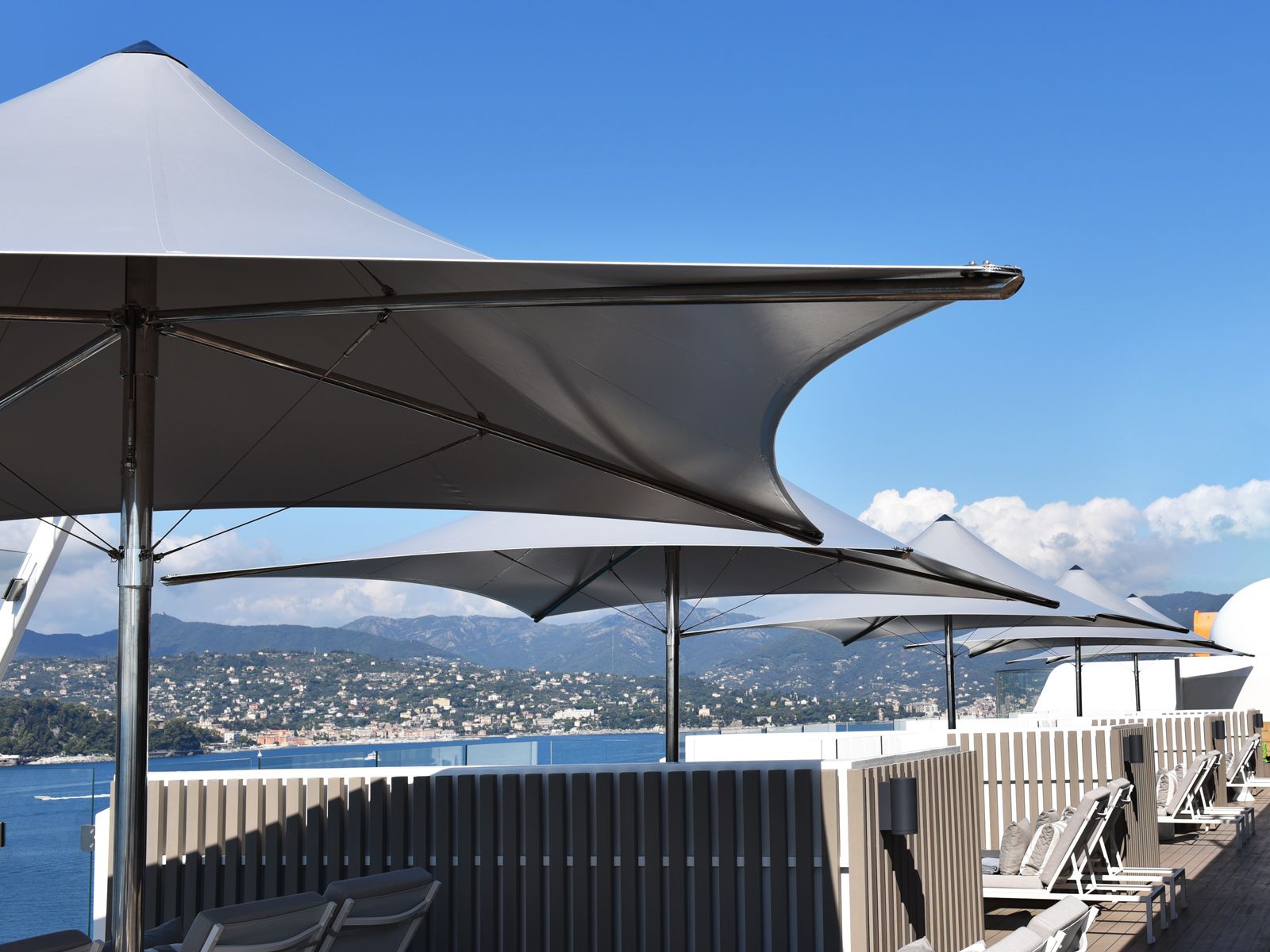
316 marine-grade stainless steel does not require painting, coating, or seasonal treatment. The frame’s corrosion resistance is built into the alloy, so there is no surface coating to chip, reapply, or inspect.
Routine care is straightforward: wipe the steel components with a damp cloth at the end of the season before storage. For parasols installed near a swimming pool or in a coastal location, rinse the frame occasionally during summer to clear any accumulation of chlorine or salt deposits before they have time to concentrate on the surface.
The canopy fabric does require eventual replacement after five to eight years of UV exposure, depending on how the parasol is stored. The steel frame will still be structurally sound at that point. Replacement canopies are available through our accessories range.
How to choose the right stainless steel parasol
The right model depends on the setting more than personal preference. A few questions narrow it down quickly.
| Section | Details |
|---|---|
| Size | A 3m parasol covers a standard six-seat table in full shade when the sun is directly overhead. A 4m model is better for larger groupings or irregular seating. For commercial terraces where multiple parasols run in sequence, consistent sizing matters for both shade coverage and visual consistency. Our size and shape guide covers this in detail, including how canopy shape affects coverage at different sun angles. |
| Centre-pole or cantilever |
Centre-pole models are simpler, usually more affordable, and require the pole to run through or beside a table. Cantilever models offset the shade from the support structure entirely, which keeps the seating area clear and allows the canopy to rotate 360 degrees to track the sun. For terraces where table positions are fixed and obstructing a table centre is a problem, cantilever is the right choice. See our centre-pole versus cantilever guide for a detailed walkthrough. Please note: At Shade Specialists, we only offer stainless steel centre-pole parasols. |
| Base |
Stainless steel frames are heavier than aluminium, and a heavy base is non-negotiable in any exposed position. Our parasol base guide covers weight options, water-fill bases for commercial use, and in-ground fixing for permanent installations. For parasol accessories including lights and heater integration, our accessories range has options compatible with all stainless frames. Not ready to commit to a permanent purchase? We offer a parasol hire service for events, seasonal venues, and trial installations before a site-wide commercial order. Subject to parasol availability. |
Are stainless steel parasols an eco-friendly choice?
Compared to aluminium alternatives, yes, for one simple reason. 316 stainless steel contains no surface coating. Powder-coated aluminium frames use paint systems that eventually break down and require reapplication, generating waste in a way a stainless frame doesn’t. The steel itself is 100% recyclable at end of life without any separation process.
Longevity matters too. A stainless frame that lasts 15 years produces less manufacturing impact per year of use than an aluminium frame replaced every five. We publish our sourcing standards and product lifecycle data on our sustainability page.
Frequently asked questions
What is a stainless steel parasol?
A stainless steel parasol is an outdoor shade structure with a frame, pole, and fixings made from stainless steel rather than aluminium or wood. The best outdoor models use 316 marine-grade stainless steel, which contains molybdenum for resistance to chloride corrosion. Unlike powder-coated aluminium, the corrosion resistance is inherent to the alloy and not a surface coating that chips or peels over time.
Are stainless steel parasols rust-proof?
316 marine-grade stainless steel is corrosion-resistant rather than absolutely rust-proof, but under normal outdoor use, including coastal and poolside conditions, it will not corrode. Scratches don’t change this, because the protection runs through the alloy rather than sitting on the surface. Minor surface marks can be buffed out without any structural consequence.
How long does a stainless steel parasol last?
In commercial use, our installations regularly see 10 to 15 years of structural service from the steel frame. Canopy fabric needs replacing every five to eight years, depending on UV exposure and winter storage. The frame will still be sound when the third canopy goes on.
What wind speed can a stainless steel parasol handle?
Our stainless steel frames are wind-tunnel tested to 126 km/h or Beaufort Force 10 that exceeds UK storm conditions and makes them appropriate for rooftop terraces and exposed coastal positions. The Hurricane Extreme range is specifically rated for high-exposure commercial installations. Individual product pages carry the tested wind rating for each model.
Can I get a custom-branded stainless steel parasol for my venue?
Yes. We supply custom-printed canopies fitted to stainless steel frames. Printed canopies are available with full-colour branding across the entire canopy panel or valance sections. Most commercial clients order these as part of a site-wide supply arrangement. Contact us directly to discuss canopy sizes, print specifications, and lead times.
Where can I see stainless steel parasols installed in the UK?
Our photo gallery shows installations across a range of settings, which includes residential gardens, restaurant terraces, hotel pool decks, and rooftop bars. We supply and install nationwide. Commercial buyers can request site references from comparable venue types through our contact page.


